Today was a resting day. I had terrible cramps and headaches, and I just couldn’t get up. I practically stayed in bed all day. Come to think of it, it was my first time to spend a whole day inside the room after we moved to Morocco. Well, couldn’t help it.
So, my symptoms: I looked them up, and I found out something. 調べてみると、このようなことがかいてありました。
“Perimenopausal hormone fluctuations can worsen your familiar, underlying premenstrual and menstrual symptoms, as high levels of estrogen can cause your body to release prostaglandins, or chemicals that make your uterus contract, which cause pain like heavy cramps.”
Also, I haven’t slept well for a while. That’s supposedly another thing about perimenopause. I wake up so often, like every one or two hours, or, I get strange dreams. Usually dreams with nonsense stories. Apparently, I ask my husband questions when I wake up (he is often awake next to me, as he is working with his laptop) and poor Olof has to listen to my silly stuff which doesn’t make sense at all…
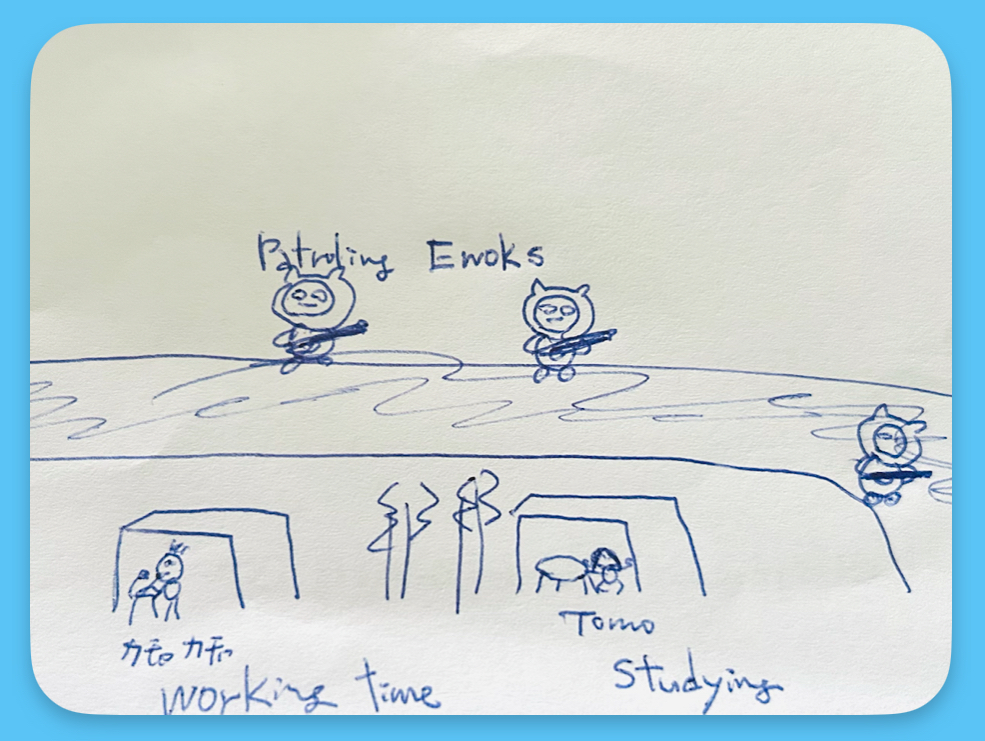
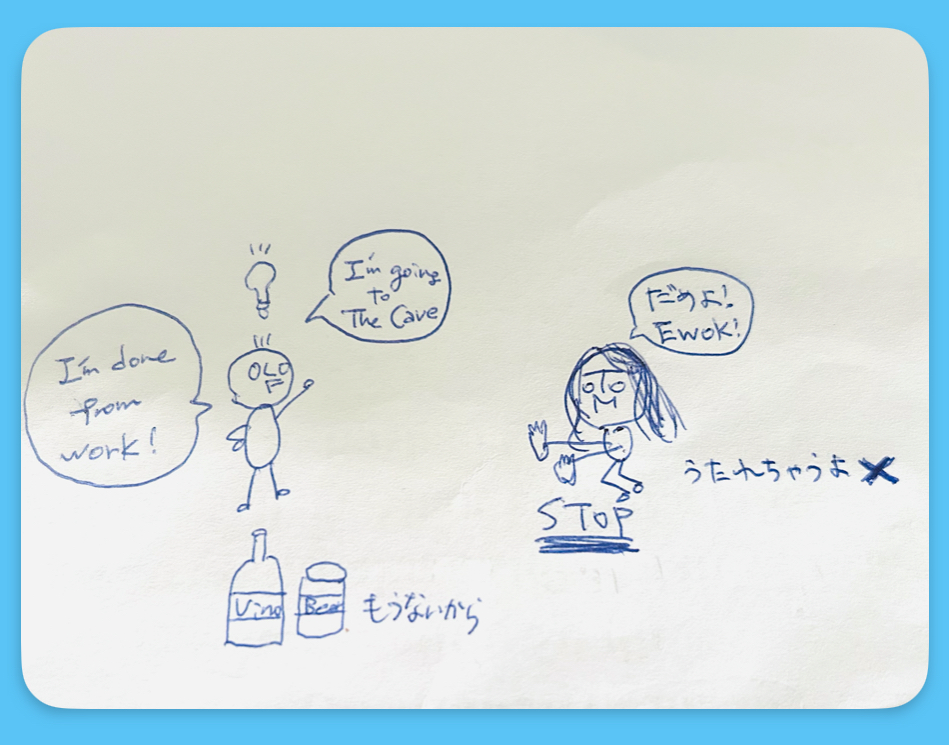
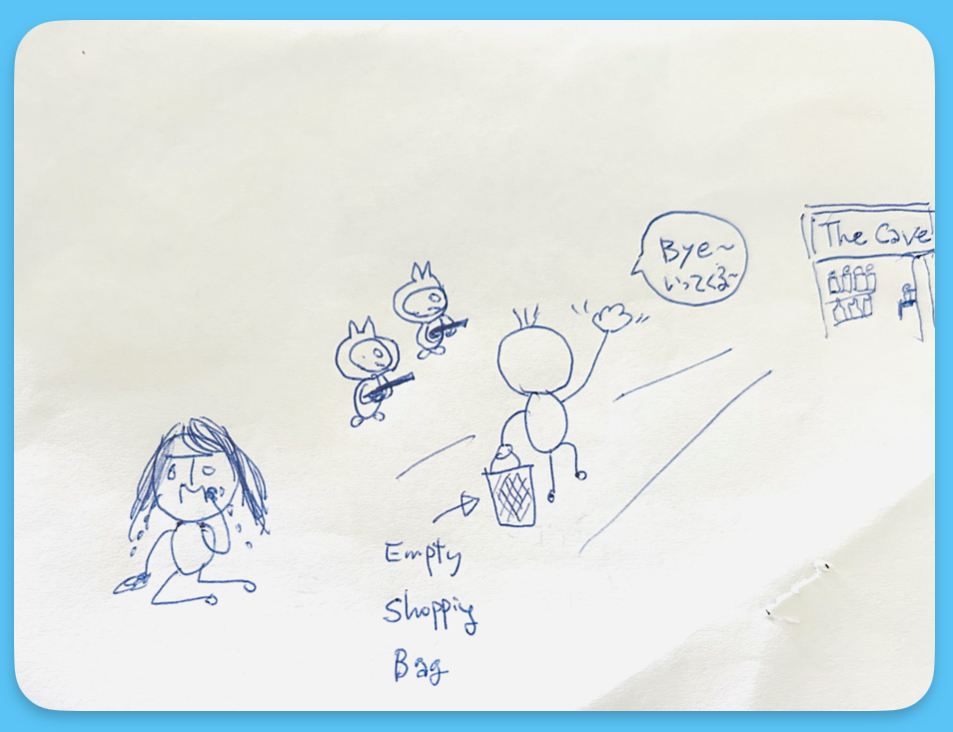
For example, this is the kind of dream I have. Note: my son is an artist, but I am not. 例えばこんな夢。絵で説明します。ところで、絵を描く才能があるのは息子であって、私ではありません。
Olof is working, Tomo is Studying, Ewoks from Star Wars are patrolling us with their guns. – なぜか離れた部屋でそれぞれ作業中の夫婦、スターウォーズのイゥオークが拳銃を持ってパトロール中。
Olof wants to go to the Cave to buy his “Adult Beverages” but Tomo worries that he will be shot by Ewoks. – お酒を買いに行こうとするオオラフを「イウォークに撃たれちゃうから、やめて!」と必死に止めるトモ。
But, his passion for “Adult Beverages” was big. Ewoks await. Tomo cries. – オオラフはお酒屋さんへ出発。イウォークは定位置へ。トモは泣く。The End.
According to my husband, when “Bad Olof” (such as this) appears in my dreams, it is NOT a real Olof. That “Bad Olof” is a “Norwegian Olof.” Because the Real Olof is Swedish.
Anyone who is going through Perimenopause or menopause: Do you have bad dreams? Do you experience cramps? Do you have a Norwegian partner who appears to be Swedish in your dream? I hope we are able to survive during this challenging time together (with a good sense of humor and lots of understanding from our partners) 💝💝💝
This Easter Monday, I woke up with the sad news of Pope Francis passing. Many years ago, I saw this video, and it brought me tears. I had to watch it again. What touches me deeply is that Pope Francis makes sure that all the audience in the area gets involved for this little Emanuel’s question and lets him hear the answer to console him. There is such a joyful, “let’s all say it together!” atmosphere. It almost looks like you are at the Bon Jovi concert, where you are asked to sing along. You would be singing with John Bon Jovi, would you? See, it’s not just from the Pope’s words to a little Emanuel, or, something like “this is what scripture says…”
Everyone was involved. All the neighbors of Emanuel helped him.
Power of people: Power of community: I think little Emanuel (who is probably not little anymore) grows up to become someone who can learn to love and trust people in his community, and who can perhaps become a good leader to make his society a better place. Because he learned that the community as a whole can comfort a little boy with love and kindness.
What is the definition of “Advanced Society”? Is it Technological Prowess? Is it Economic Prosperity? Is it Richness in Culture? When ChatGPT gives us an answer, when Katy Perry can fly into space, or when we can purchase online, are these the signs of advanced society?
I am going to share my personal opinion here. What I value in an advanced society is, simply, “Kindness.” 私的な<進んだ社会の定義>は、その社会に『まわりに対する優しさ』があるかどうか、です。
People simply get scared when we see others who are not like ourselves. That’s a normal human defense mechanism. Then, we have a choice: 人間って、自分と同じ人種や文化ではない人にはどうしても防衛体制をとってしまいますよね。これは普通のこと。でもそこで選択枠があるのかな、と。
#1) We could stay being scared, which leads to confusion or misunderstanding. But, without trying to be inclusive or reaching out, we create a big gap. In a terrible scenario, this creates arguments, then, a real worst case, war between countries or cultures. そのまま防衛体制をとり、それがもとに、混乱や誤解も起きてしまったり。理解しあおうとしないので、大きな溝が生じてしまい、闘争がうまれ、最悪の場合、国や文化の間で戦争にまで発展してしまう。
#2) We acknowledge that we are all humans, and we should be open-minded about differences. No need to create arguments; instead, put energy to find a common ground. みんな人間!だから、違って当然、と認知する。その上で共通点を見つけることに集中していく。
I think #2) requires extra work, BUT, with the help of “kindness”, anyone can achieve it – without any ChatGPT assistance or an Amazon Prime purchase. However, giving kindness to others is a POWERFUL decision, a real dedication, and a rewarding lifestyle, which has an even MORE POWERFUL capability to change society.
I live in Morocco as an immigrant. I am not an expat, I am not a diplomat, I simply migrated from another country. I am an alien who cannot speak the local language, nor understand the local culture fully. YET, people here have been welcoming me, trying to help me, and including me with an open heart (By the way, not many people here care about Katy Perry’s space trip – I asked).
That’s what I call “Advanced Society” – There is a harmony. And, when you are in harmony, people are vibrant. Their smiles are genuine. And, that has a positive, contagious effect, that I would also like to be kind to them & contribute to their society somehow. これが、<進んだ社会>なのかなぁ、と。そして、そういった調和ある社会にいる方達は、活気に満ちています。笑顔も本物です。そして、そのような社会にいると、自然と、私もみなさんに優しくなりたい、貢献したい、と思えてきます。
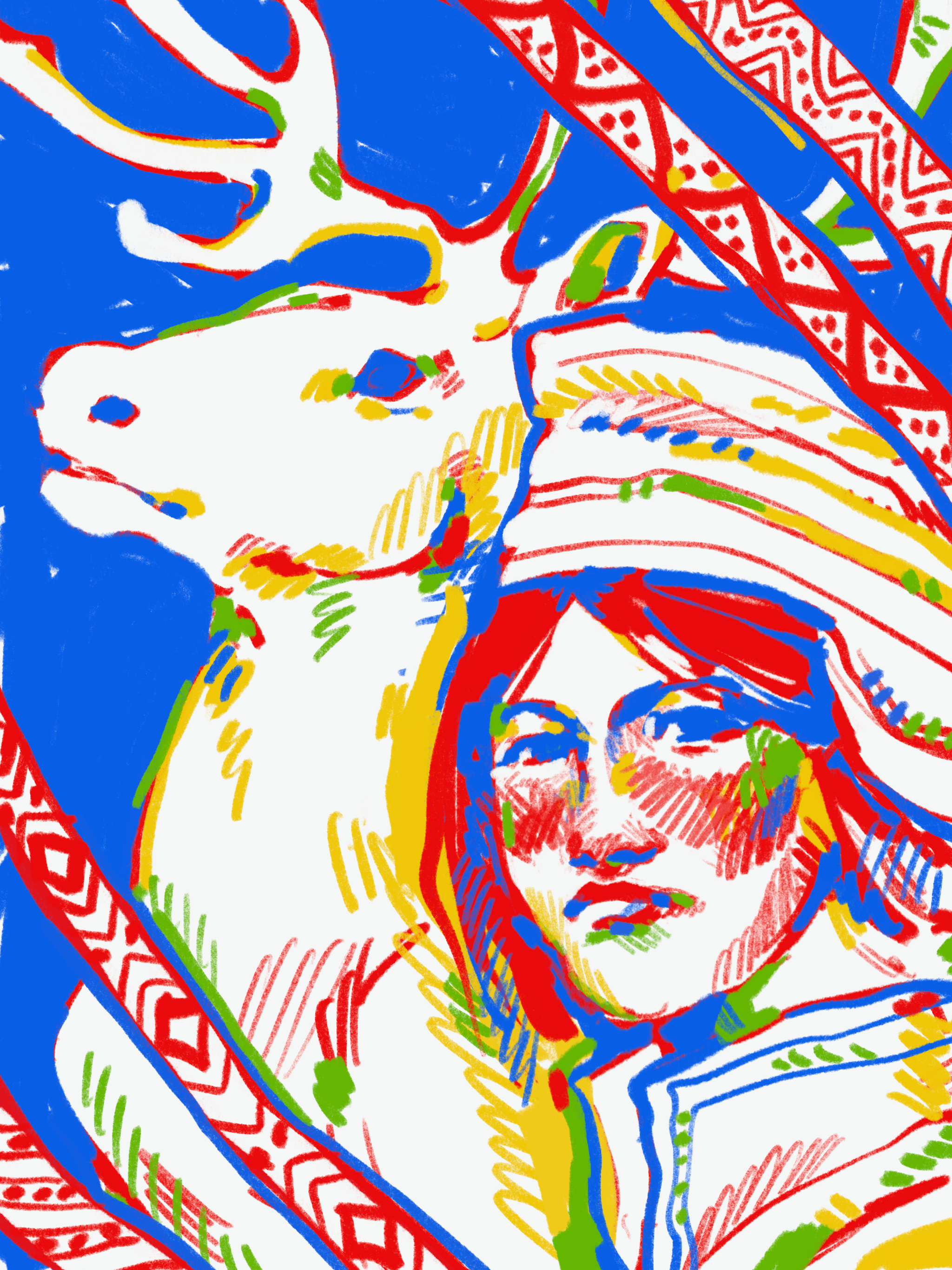
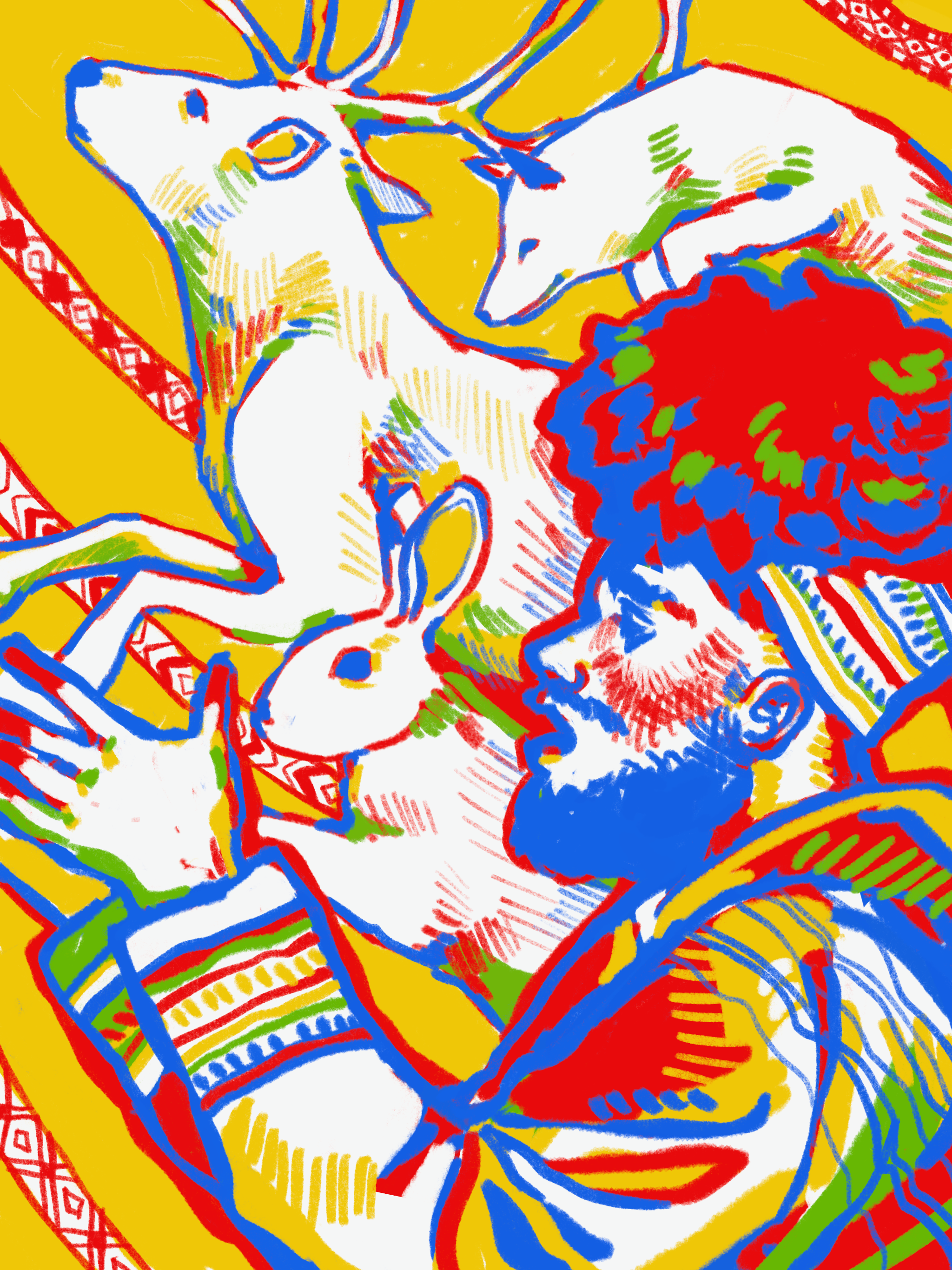
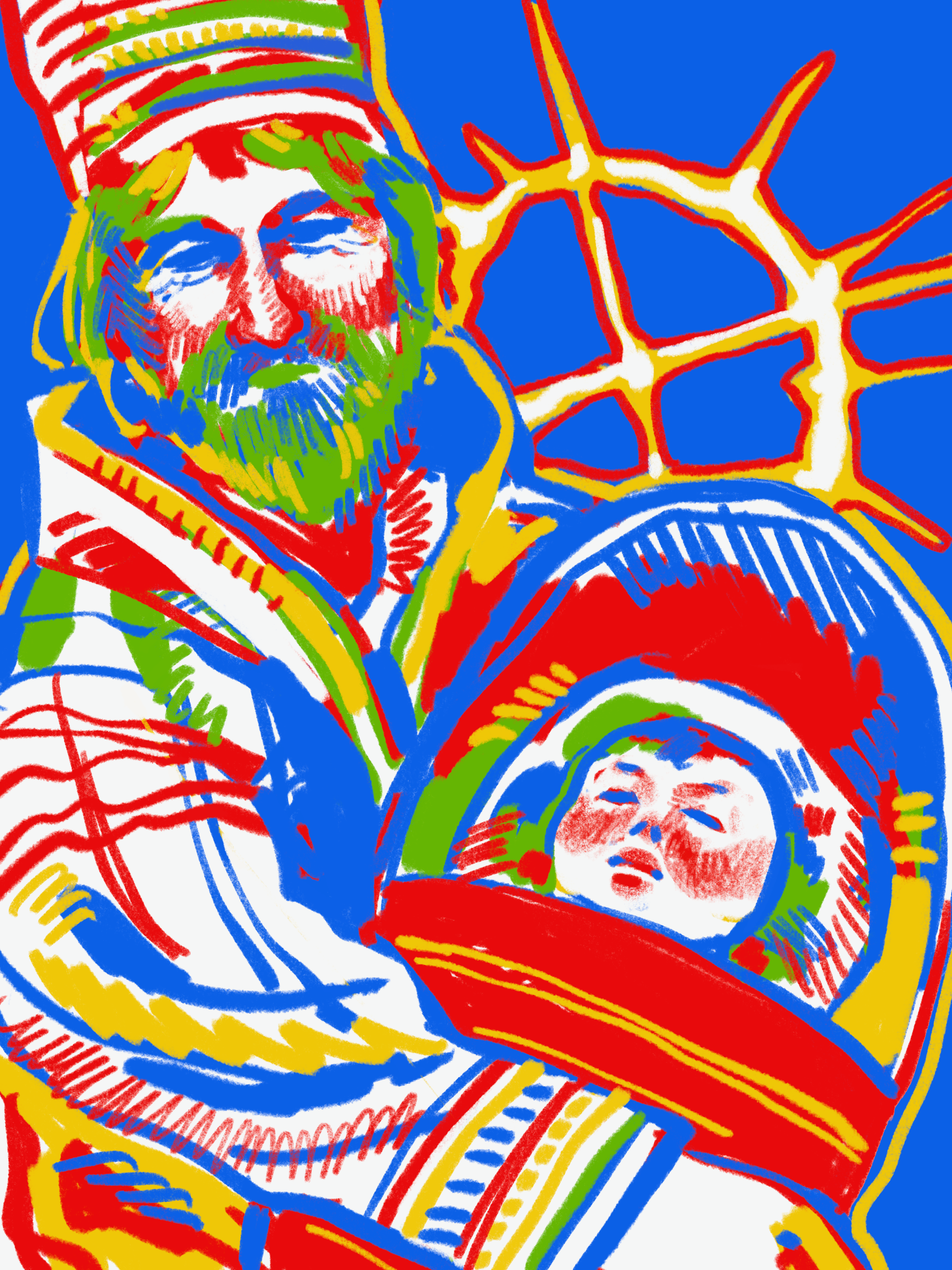
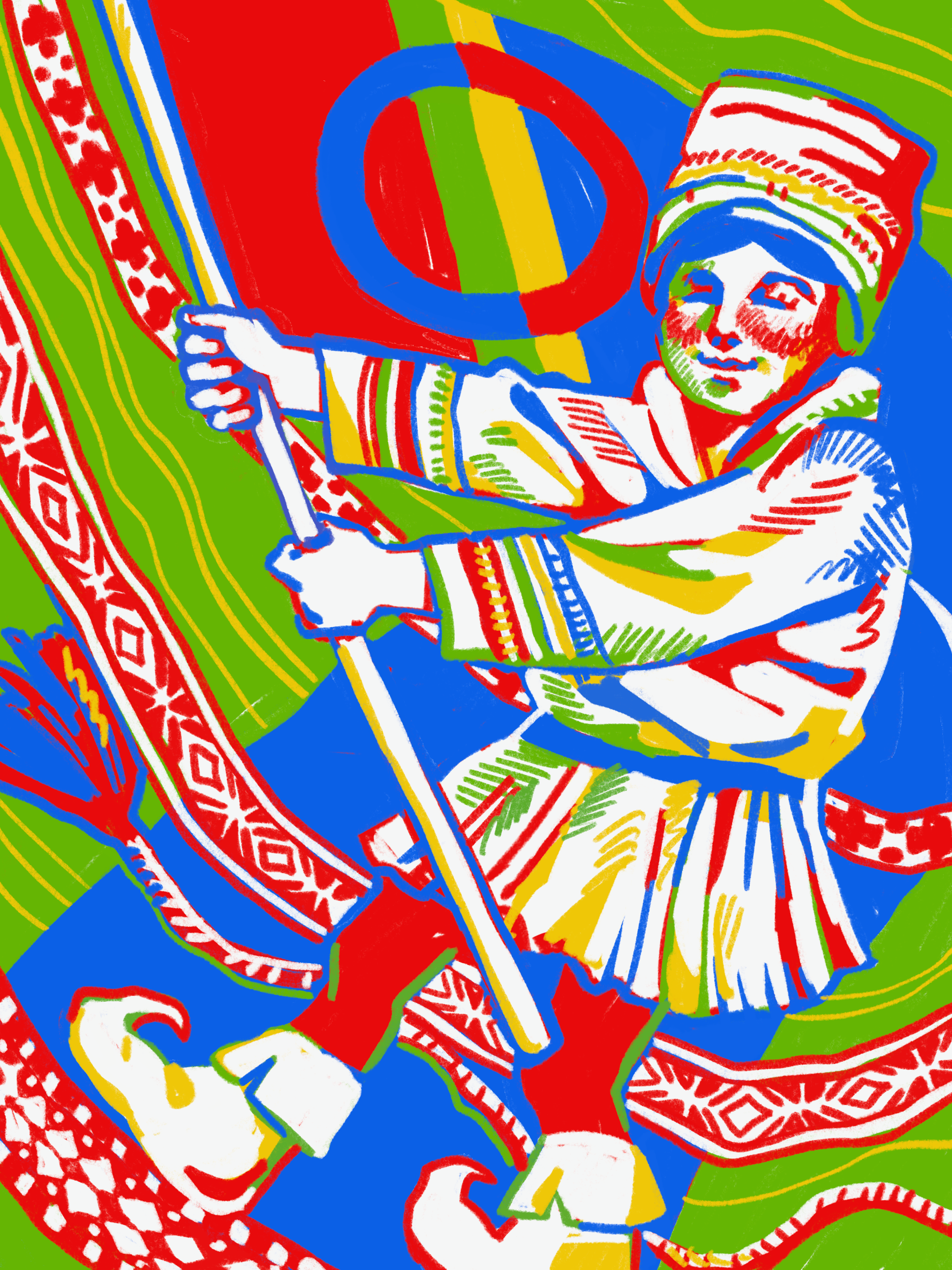
Our son who studies Graphic Art at RISD shared with us these assignments; apparently, he had to “choose a cultural theme (e.g., festival, tradition) and create a series of illustrations incorporating only 5 colors significant to that culture. You should explain their color choices in relation to cultural symbolism.”
He chose the “Sami” culture, as he is part of Sami and we, as a family, cherish its tradition dearly. The harmony of the colors and expressions in these illustrations encouraged me to express what I wrote today. I found the tremendous “kindness” in his art. Tack så mycket, Koji! On this Easter, on this day of hope & renewal, I choose to be kind.
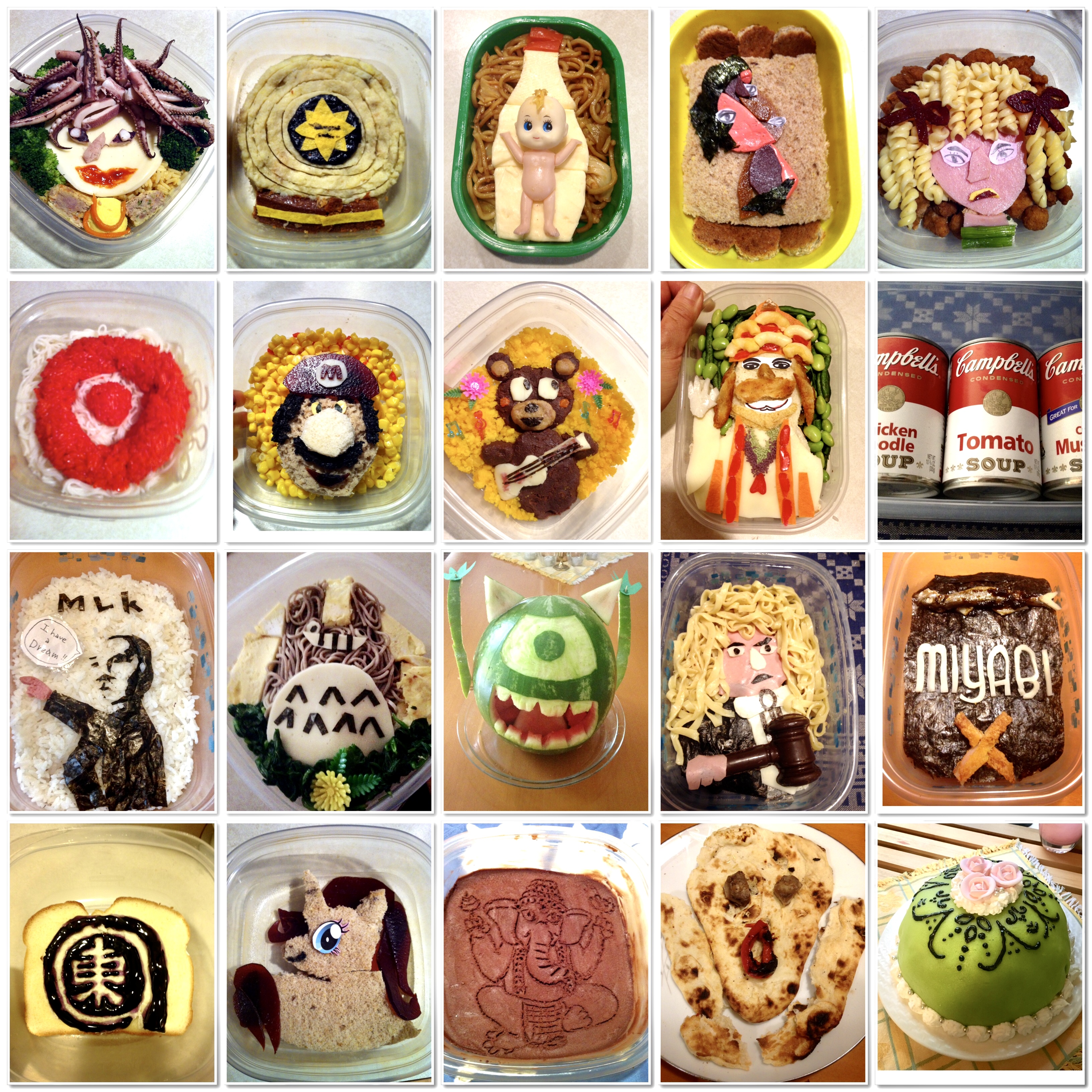
Everyone has their own way of expressing themselves. Some dance, some sing, some paint, some calligraphy, some act, or some say jokes – whether they are funny or not (I love my husband) . I think I often make sillyObento 🍱. When our kids are at school, I made these weird Obento, and this might have caused some unnecessary difficulties or questions for them. Or, they learned to be extra forgiving (I love my kids).
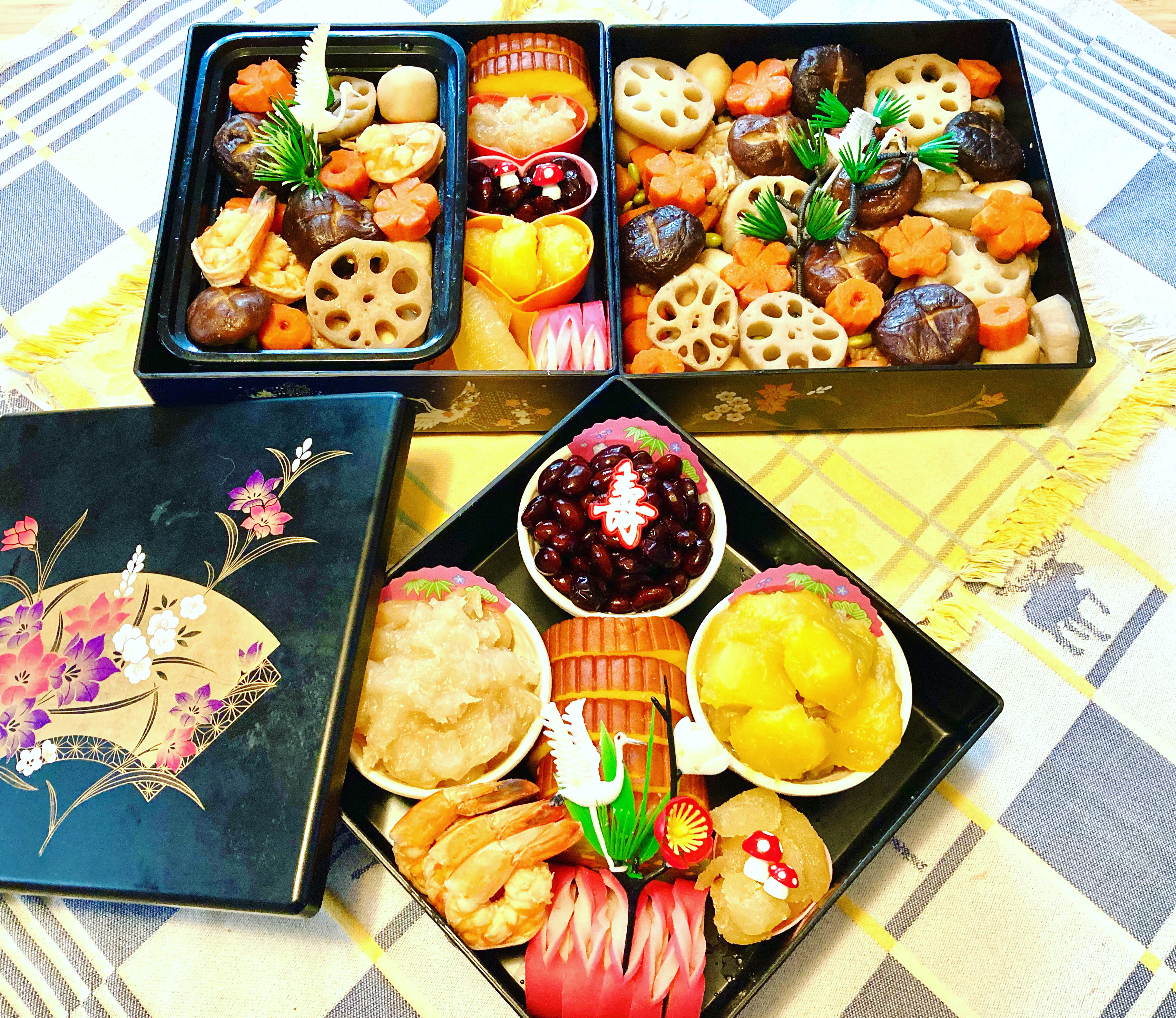
I made these “Themed Bentos” or “Character Bentos” often. However, unfortunately, they don’t often turn out to be the way I want them to be, or stay as they should be in bento boxes (as shown in the photo). Also, you might want to know that I don’t always go for silliness – for example, on Japanese New Year, I make traditional boxed dish, called Osechi.
I wonder if Obento culture is unique to Japan? It is simply a boxed lunch, with all sorts of nutritious food. But, it’s more than that. Ekiben, or Bento at school trips or sports events… The Bento on those occasions is not just food for our bodies, but for our souls; because we pack the memories which come with Bento eating time along with already beautifully packed food, and we carry it, we keep it, and we cherish it for a long time. My silly Obento was never that well-packed or nutritiously ell-balanced (sorry) but I can tell they were unique.
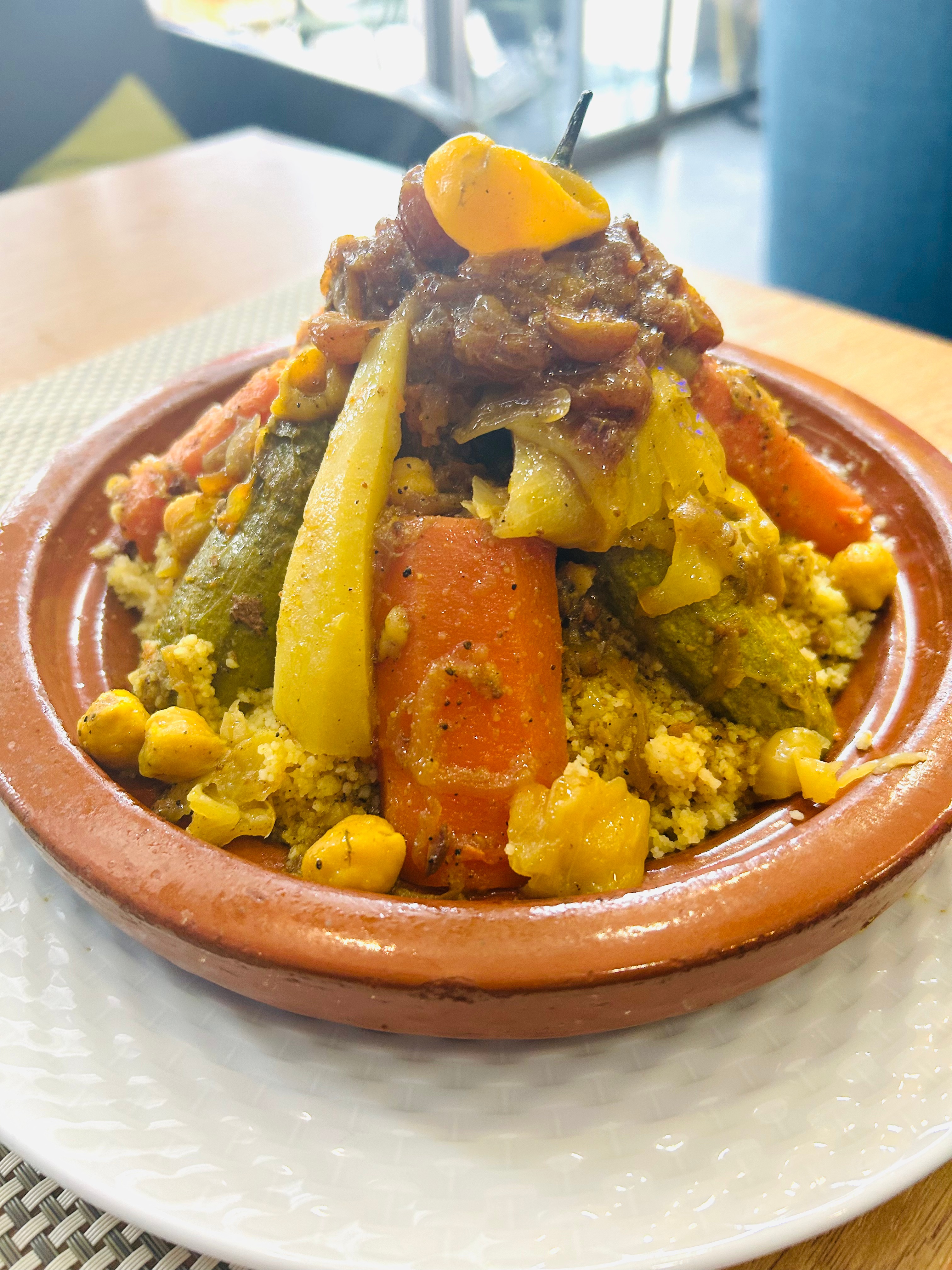
In Morocco, Friday is Couscous Day! and you can find CousCous signs all over town at cafés and restaurants. Also, pumpkins, which are essential for couscous, become the main stage character in the vegetable section from Thursday! No, you don’t need to buy a whole pumpkin, you can ask Mul Hanut (store owner) how much you want and take home your desired amount. I kind of think the couscous you eat at restaurants is a bit like a Moroccan version of Obento. The balance of meat and vegetables is just right, it looks beautiful, well-packed, and it’s a perfect dish that comes together on one plate (At home, it is more likely served on a larger plate and everyone eats it in a circle). If you want to know more about CousCous and Moroccan food in General, I strongly suggest to read here! “the Famous CousCous” by Moroccan Food Tour
About this time of the year, I hear how beautiful Sakura is from my family and friends in Japan. Then, I start missing Japan more. Sakura does that to me, deemaa (always). So, I decided to make “Japanese Cherry Blossom (Hanami)Bento” – with whatever I can use at home. See, we still haven’t received our moving boxes, so, not much Japanese tableware… oh well. Please excuse me for having Natto in the Obento. I made it for the first time by myself (and lots of lots of it, so I have to eat it).
I wonder if there are cherry trees in Morocco where I could go do Hanami? So many beautiful gardens and parks here in Rabat, I bet I could find cherry trees somewhere? It’s been challenging days, to be honest with Carte de Séjour stuff… I could use some Sakura-Fix!
Have you watched an American TV show, “Cheers”? I didn’t, but I think it’s about a group of friends who always go to the same bar, get beer 🍻, and tell not-so-funny American jokes, and live happily ever after? I could be wrong. But what I know is, its theme song is so iconic that everyone seems to know, including me. It’s called “Where Everybody Knows Your Name.”
I guess this is a good example of the “Third Place” concept; a place where you feel relaxed besides your home (a place #1) , or your workplace/school (a place #2). You are there to be yourself, with people who know your name and your personality. This concept was apparently first proposed by an American sociologist, Dr. Oldenburg in 1989. Some find this “third place” in a café, at a gym, or, maybe, at a mosque or at a church. Do you have your third place? No, you don’t need to drink beer, or say bad jokes. Btw, I learnt that there is a Darija word for bad jokes – “Nukta 7amed” – literally means, “sour (like lemon 🍋) joke”, which my translator DNA really would like to call it as “Oyaji-gyagu” in Japanese. 😆😆😆 My husband is very good at this kind of jokes; 7amed bzaaf (bzaaf = a lot), in fact.
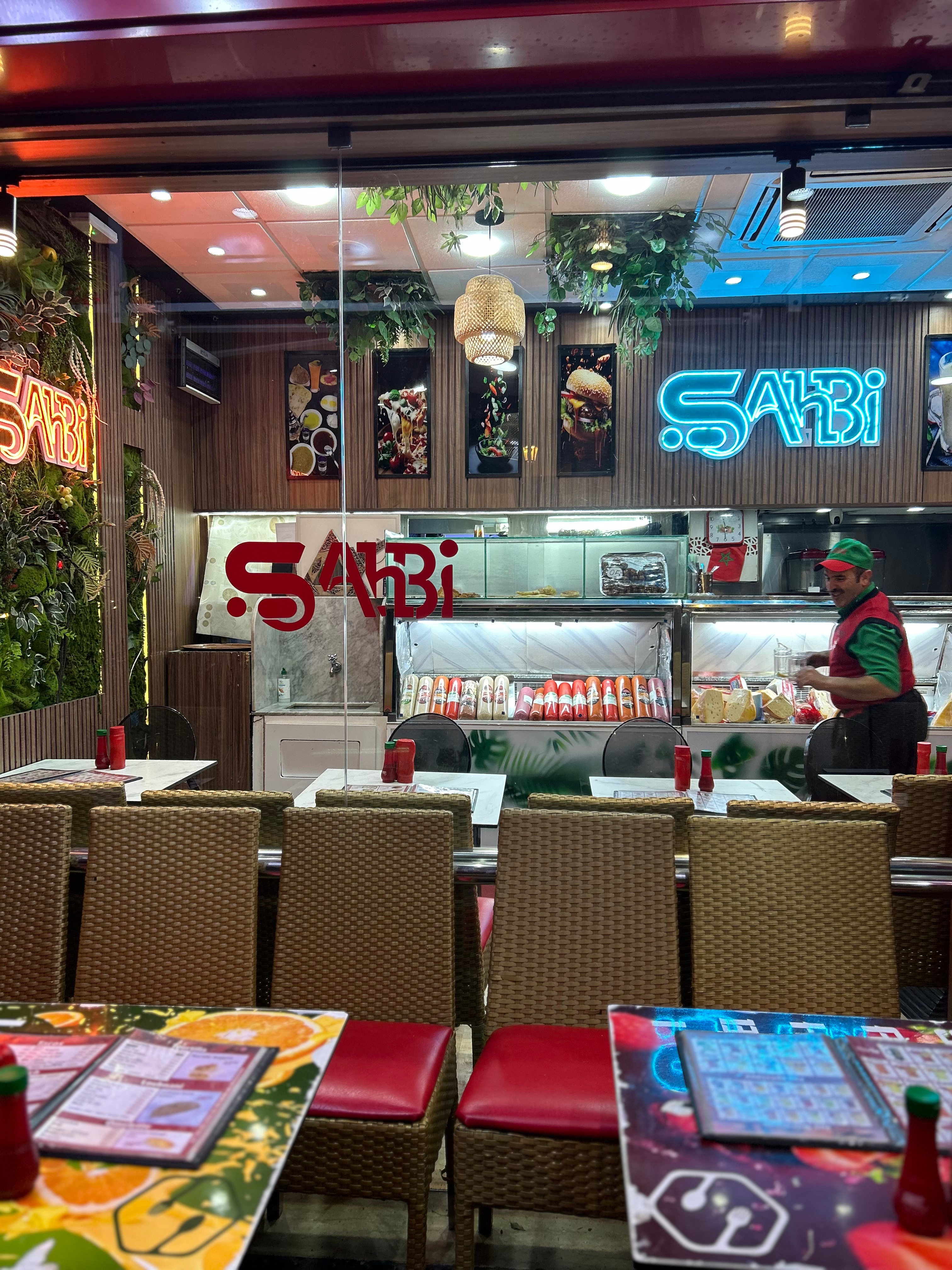
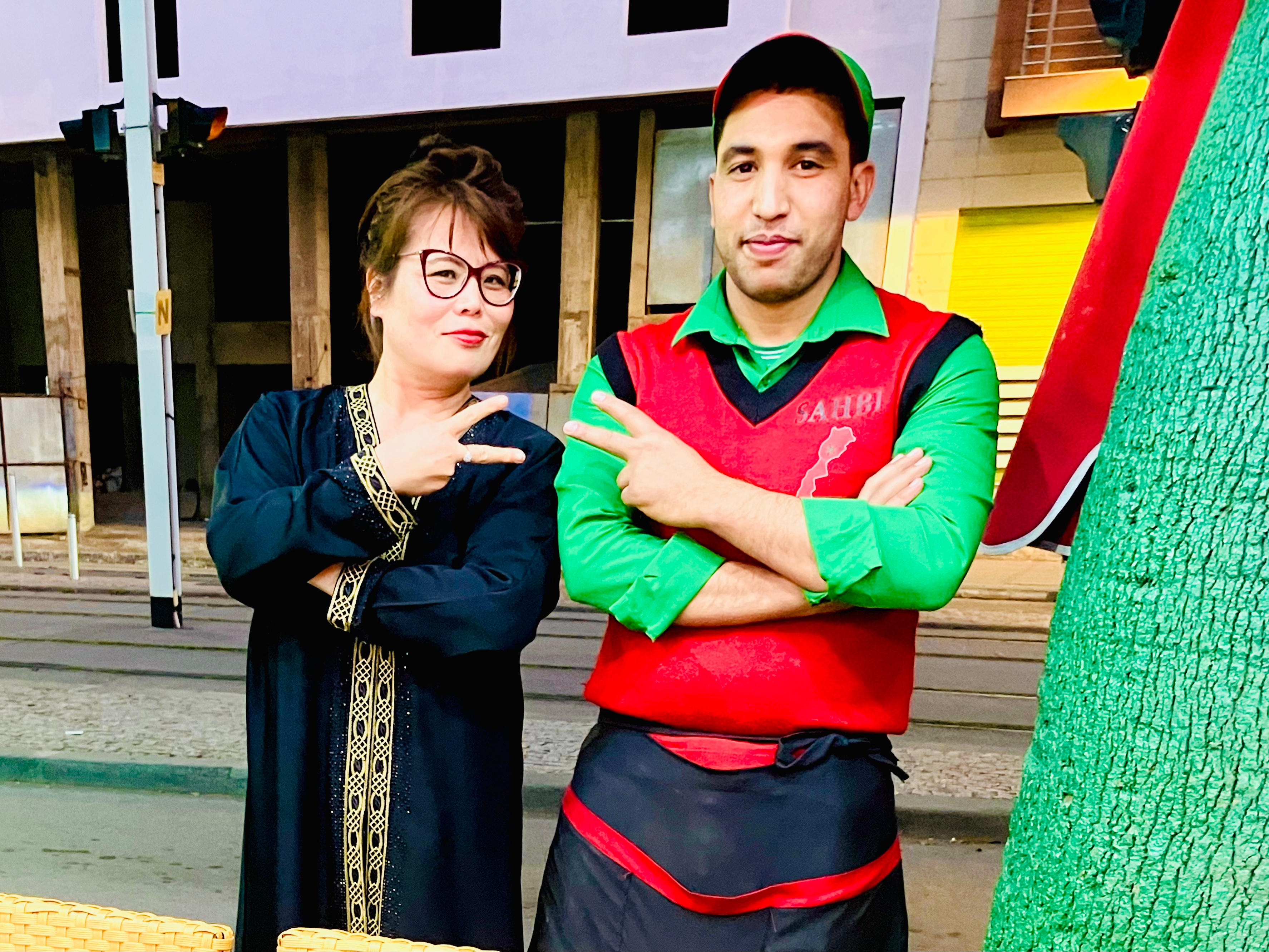
When I lived in Seattle, where Starbucks headquarters is located, I often accompanied delegations on company visits related to the “Third Place” concept and café cultures in the Pacific Northwest as an interpreter. But, since moving to Rabat, I haven’t been to Starbucks at all. Nor, any posh cafes, actually. Yes, there are many bougie cafés around here, but my husband and I usually end up having Kahuwa nousnous (coffee & milk, half/half) at more locally recommended ones. Among them, Snack Sahbi has become MY third place!
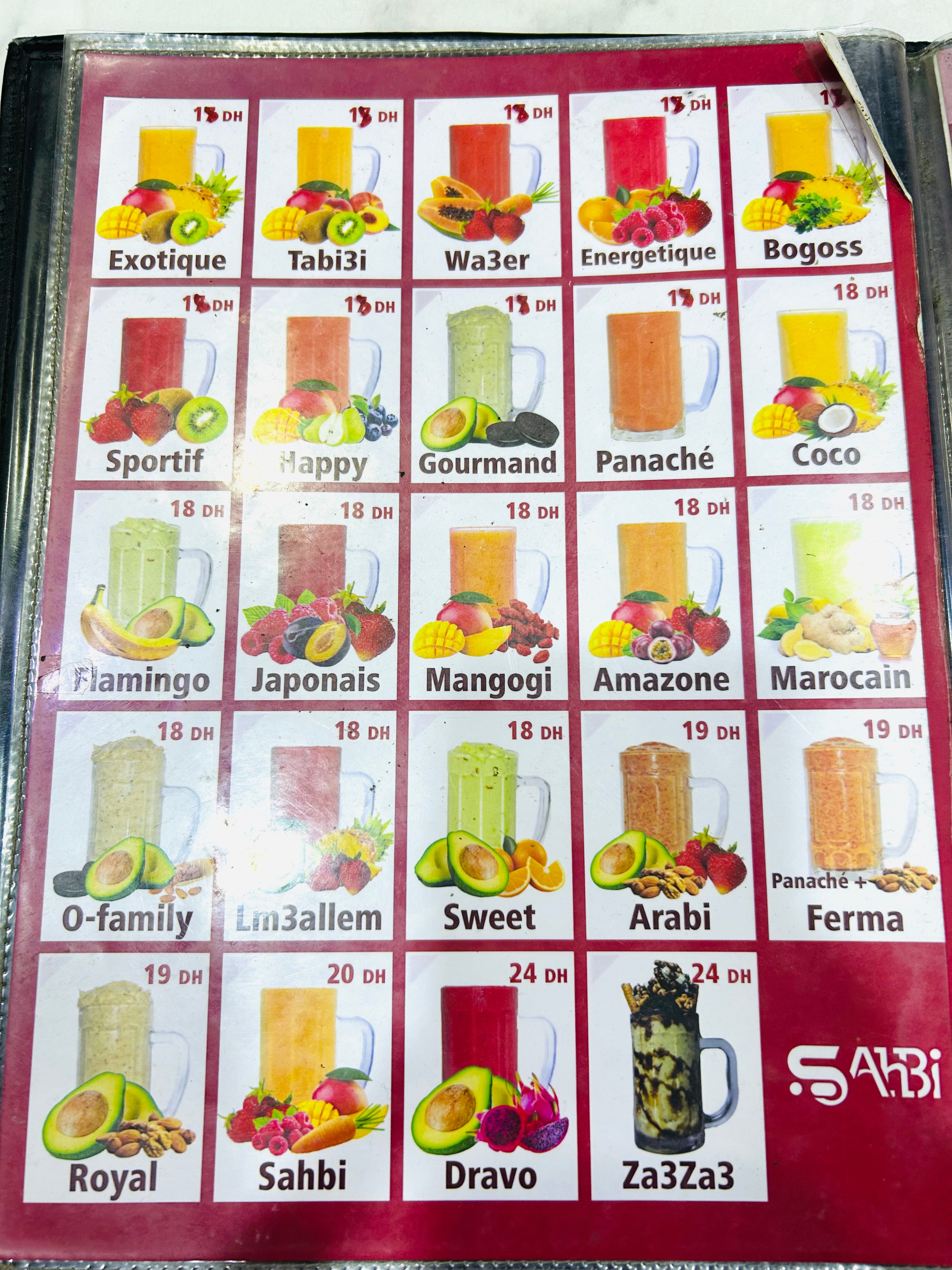
Not only is it located just a 5-minute walk from our apartment, but it’s also open from 7am to 11pm! The biggest attraction? Their juice! And LOTS of LOTS of selections! I am always happy and get excited to sit down and think “Hmm, which one should I choose aujourd’hui…?”
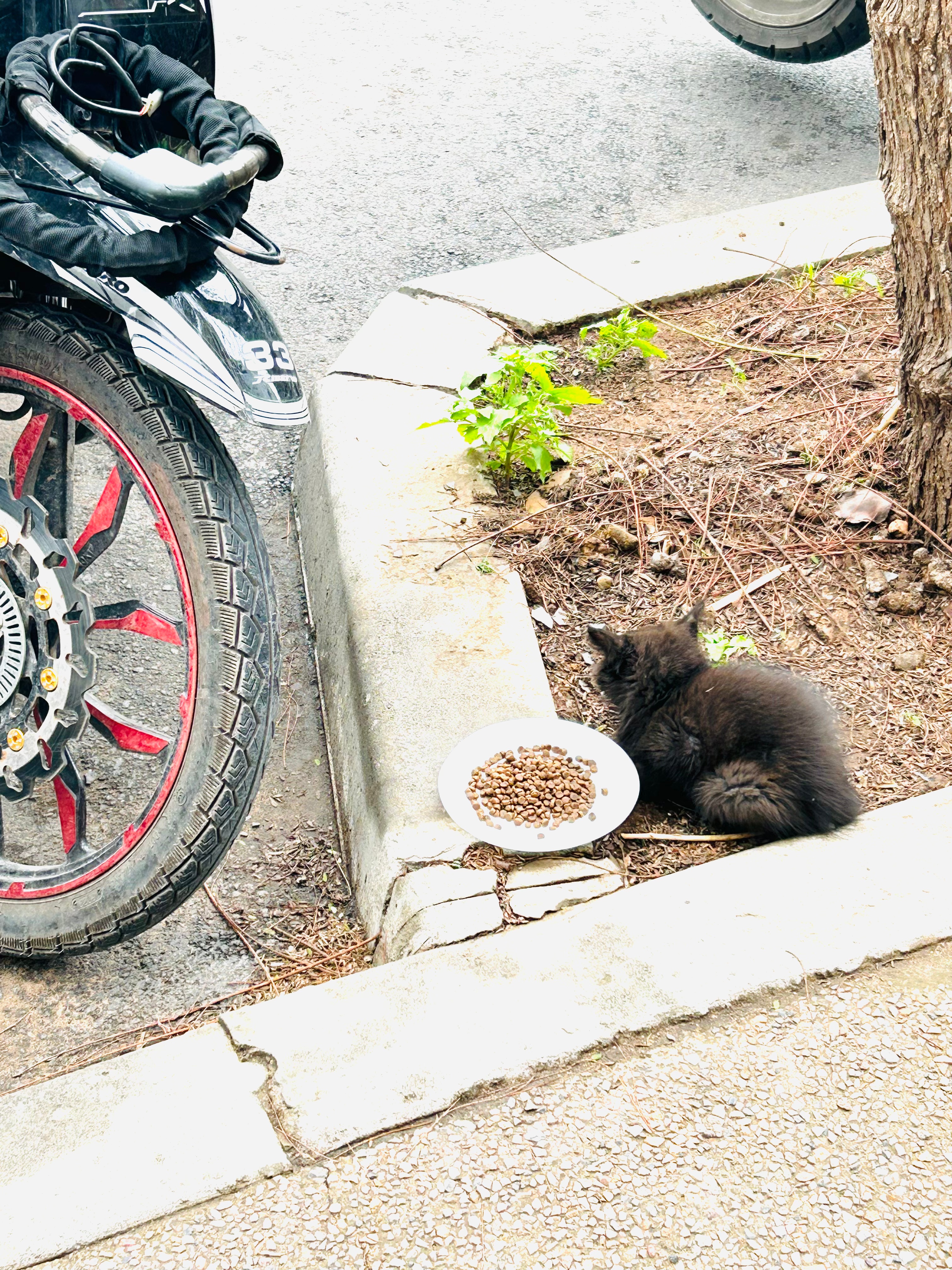
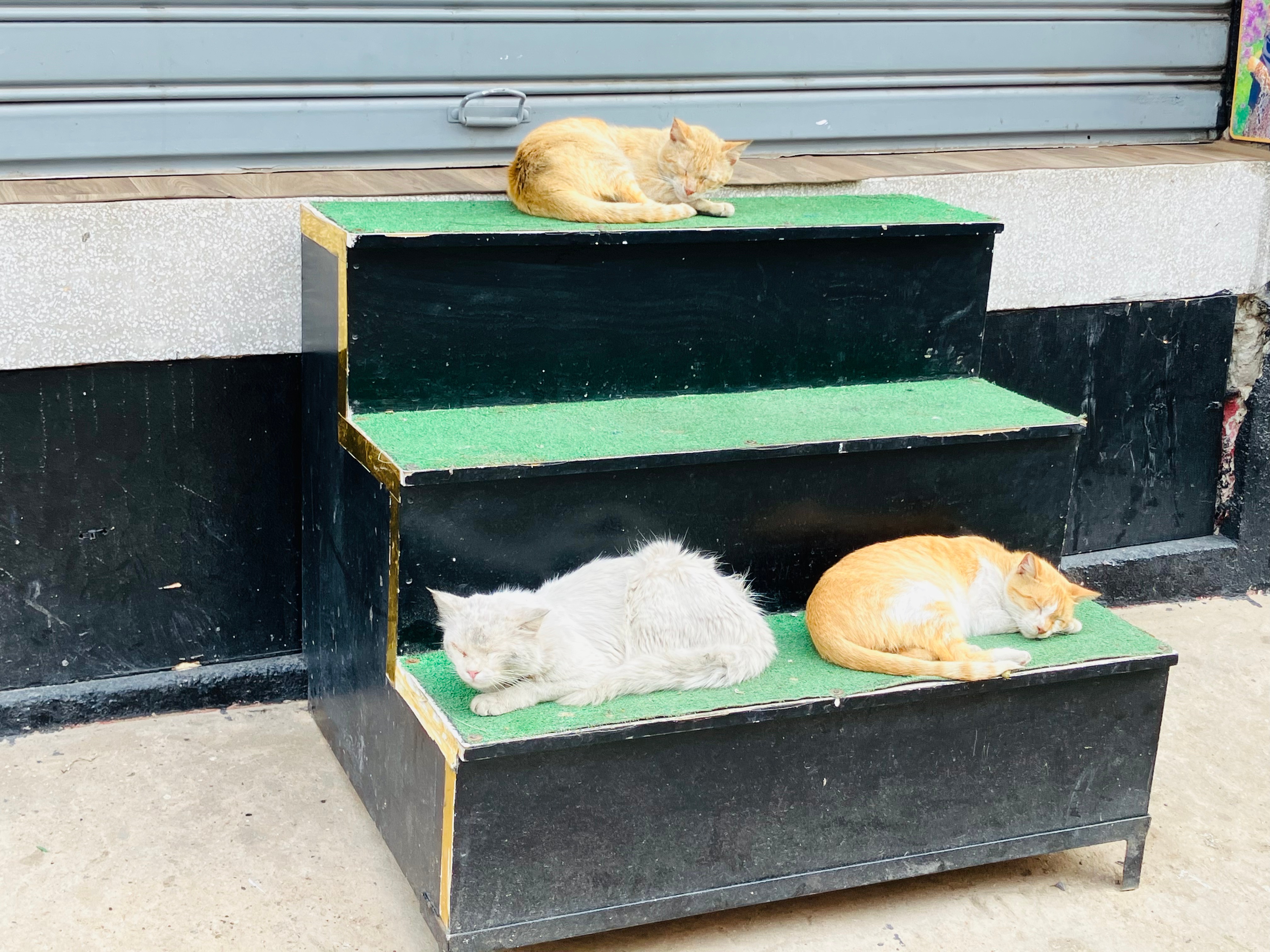
Now that we’ve been going there a lot of times, the staff have started to recognize us 🙂 Sahbi means “friend” in Darija – and to me, they are becoming my friends. While sitting facing the Avenue de France, watching the trams go by, and speaking in Japanese and in questionable French, and in even more questionable Darija with my husband and locals… and, a cat or two join our conversation, asking if we have anything for them to munch. Even when I am feeling a bit down, Bogoss (handsome) Imad-kun and other staff’s cheerful hospitality and delicious juice can cheer me up. Truly, Sahbi is becoming my “Third Place.”
そして、何度も行くようになったので、顔も覚えてくれるようになったお兄さん達。Sahbiとは、ダリジャ語で「お友達」という意味なのですが、まさに、私にとってはお友達です、はい。Avenue de Franceの道に面して座り、行き来するトラムを眺めながら、日本語や、怪しいフランス語や、もっと怪しいダリジャ語で旦那さんやローカルさん達と話したりジュースを飲んでいると、猫しゃんが「何かくれませんかねぇ」とやってきたり。ちょっと落ち込むことがあっても、ここの明るくてイケメンなお兄ちゃん達や美味しいジュースで元気&ホッとする時間です。
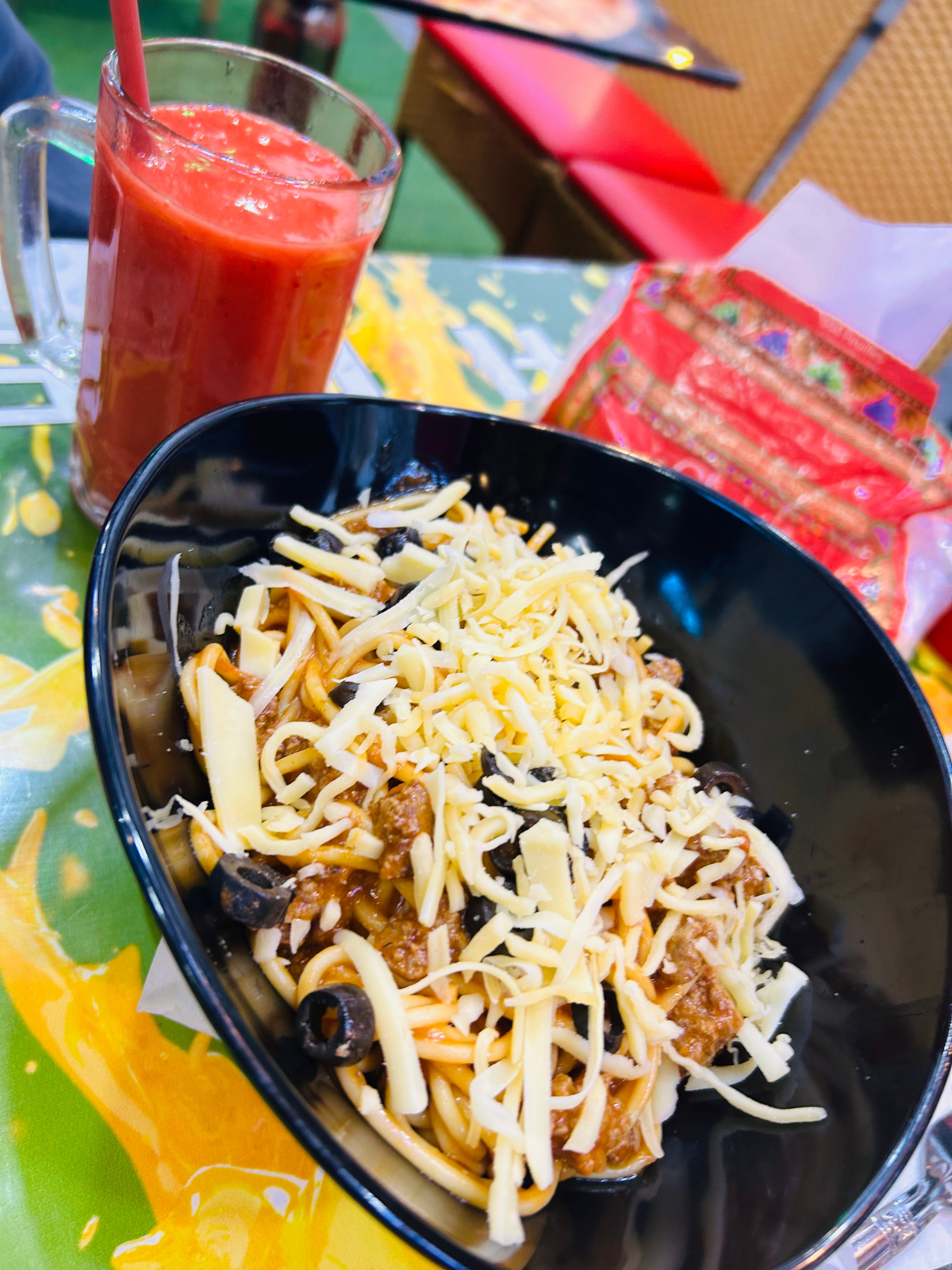
By the way, when you think of Moroccan food, I don’t think many of you would think of Sphagetti Bolognaise. 🍝 I didn’t think so either, BUT, now, I think of it as one of my comfort foods in Morocco. Here is why: 1) It tastes like Spaghetti Bolognaise, which my mother makes (and she is Japanese, never lived outside of Japan), 2) It’s a menu item you can find frequently, 3) No matter how I look at it & wherever I order it, Spaghetti Bolognaise in morocco so far tastes just like my mother’s, and I started to wonder if she was secretly Moroccan. It’s really a mystery and unexpected coincidence, that it even brings me tears – so nostalgic & so yummy. Bien sûr, Snack Sahbi also has it on their menu for 38MAD. I am crying.
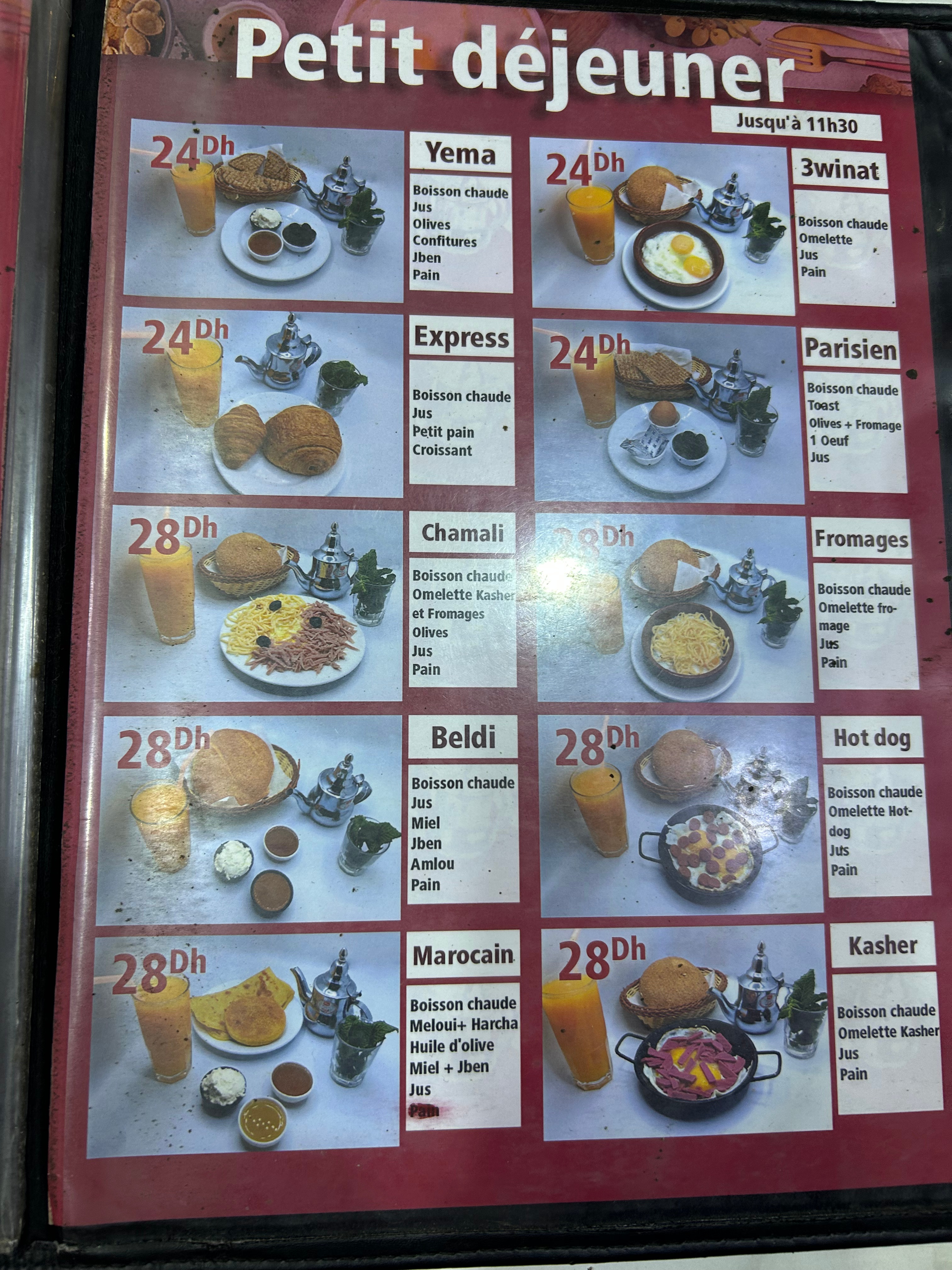
From petit-déjeuner (breakfast) to the taste of my mom, Sahbi is definitely becoming my Third Place 🎼“Where Everybody Knows Your (my) Name”🎶 Cheers!( with juice🥤)
In a previous blog, I mentioned that I sent a postcard to Japan without enough postage; 0.1MAD short. I knew that I was wrong to do so, but it was too late. BUT, it reached! What’s more, it arrived within 10 days! which is a lot faster than when I sent it from Seattle or from Barcelona (to Tokyo)! Hamdoulilah! and Churkran Bzaaf, I’m so grateful to everyone at Post Maroc, I’ll definitely repay you for your kindness someday.
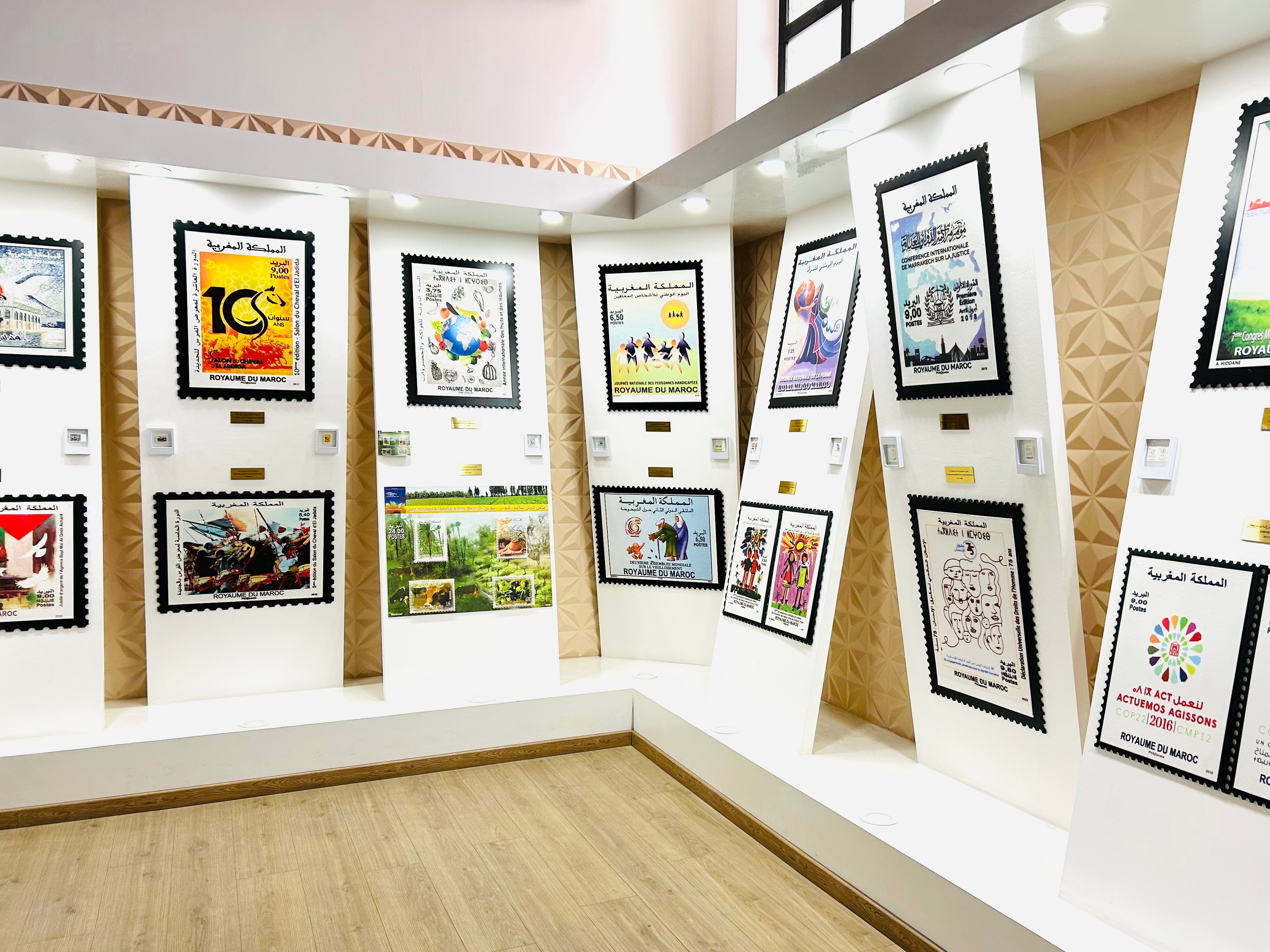
I also wrote about my simple question; ‘why are there any postcards of Rabat?’ So, I came across this “the Barid Al-Maghrib Museum (Postal Museum)” in the Rabat Ville area – maybe, there is a gift shop, and MAYBE – Mumkin – I can find Rabat postcards there??? Of course, I was also interested in the history of Moroccan postal services and the stamp exhibits. Yes, I was. And, it happened to be very close to my language school.
Entrance was tiny, but it looked very official. I paid 10MAD (about $1.0), and filled out the form – phone number, passport number, email address, etc., and I was ready to explore. At this point, I knew that there was no sign of postcards at all. But, I kept on moving, because, sometimes, that’s what a civilized person should do. Sometimes. 💪🚶🏻♂️
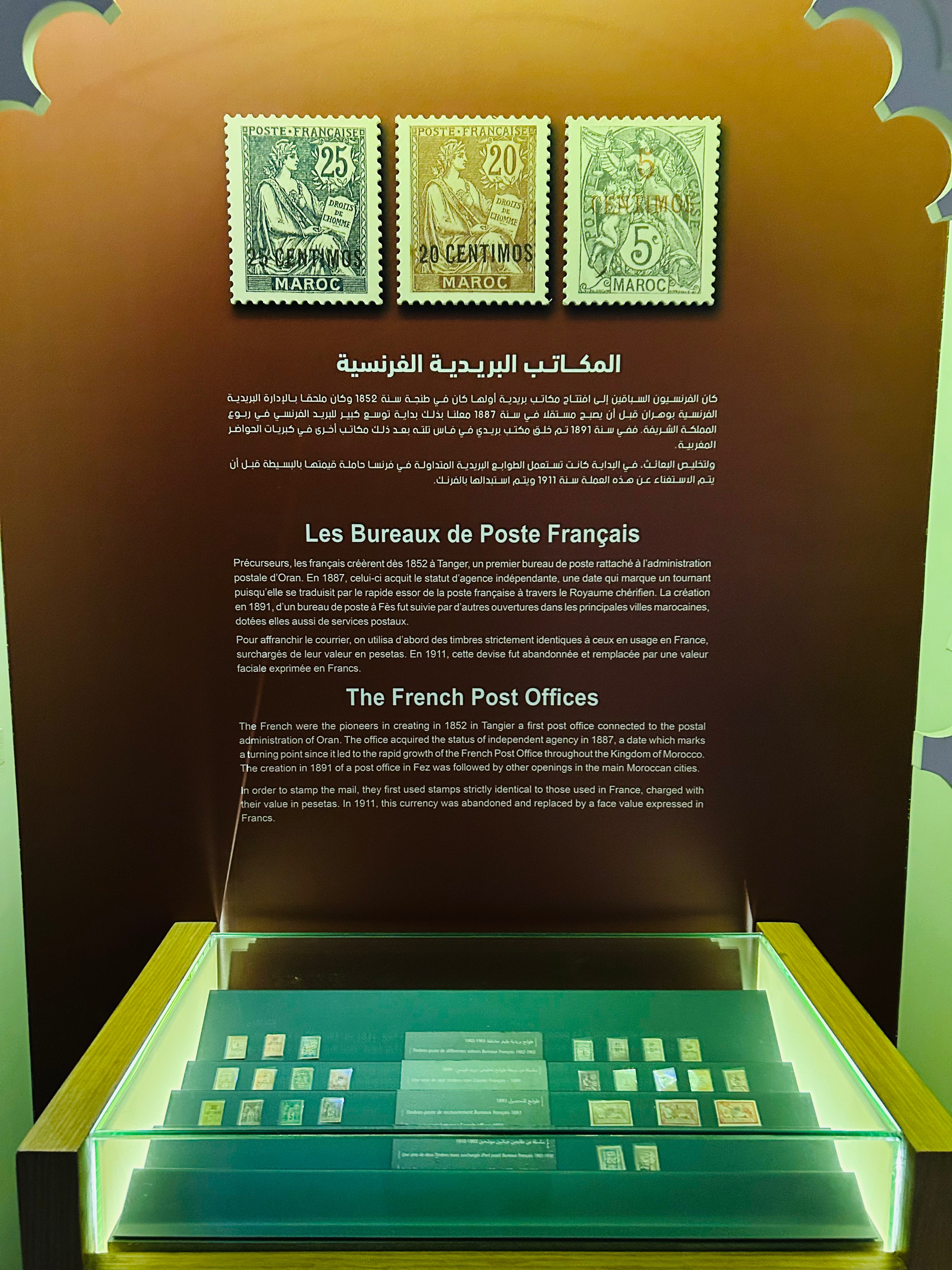
The exhibition hall was nicely equipped with easy-to-understand explanations in Arabic, French and English. My father-in-law was a stamp collector, and I wish I could have brought him here if he was still alive. He would be like a kid in a candy store, or, to honor his Swedish heritage, he would be like a kid in a herring store. 🇸🇪🐟🇸🇪
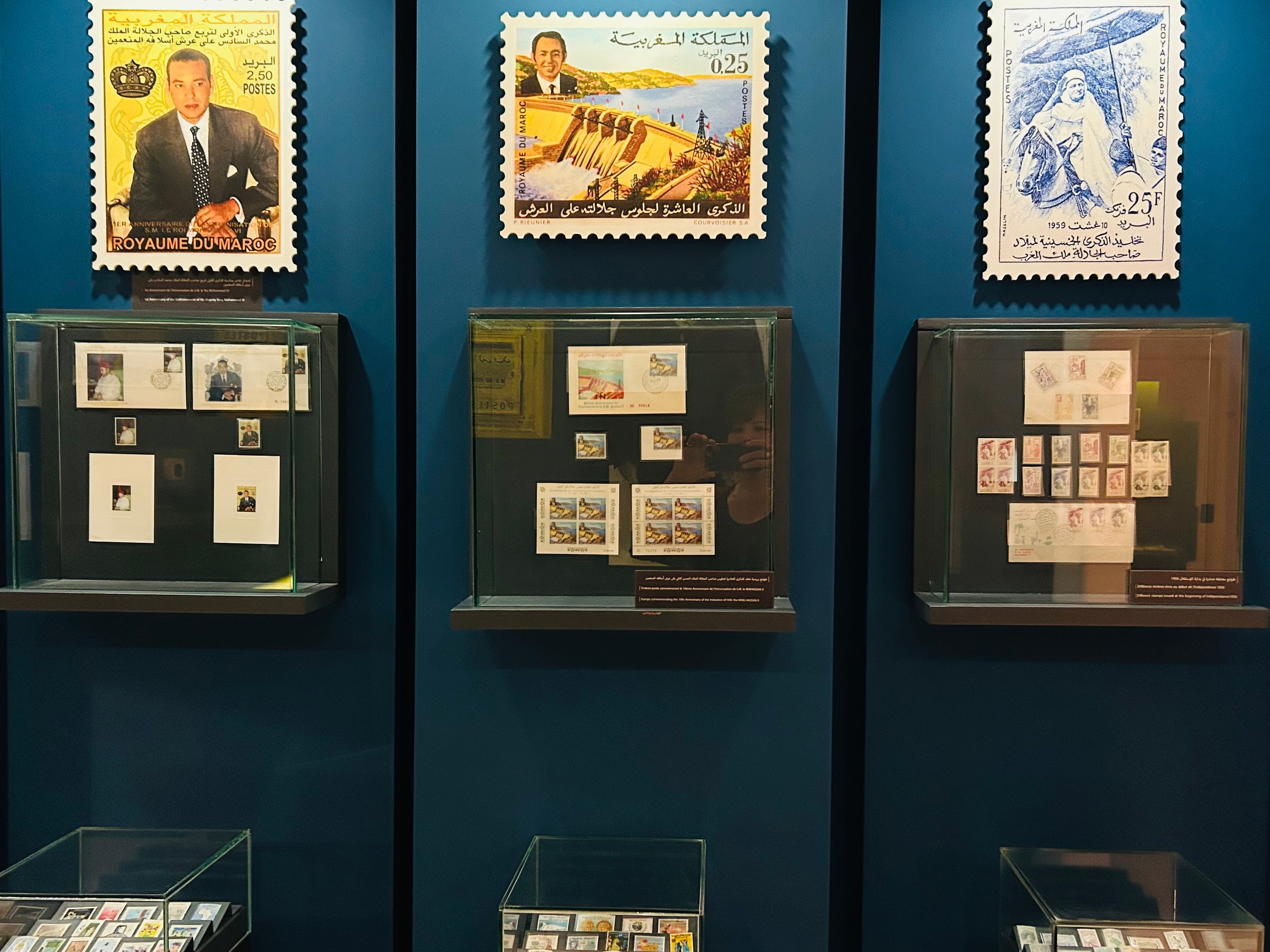
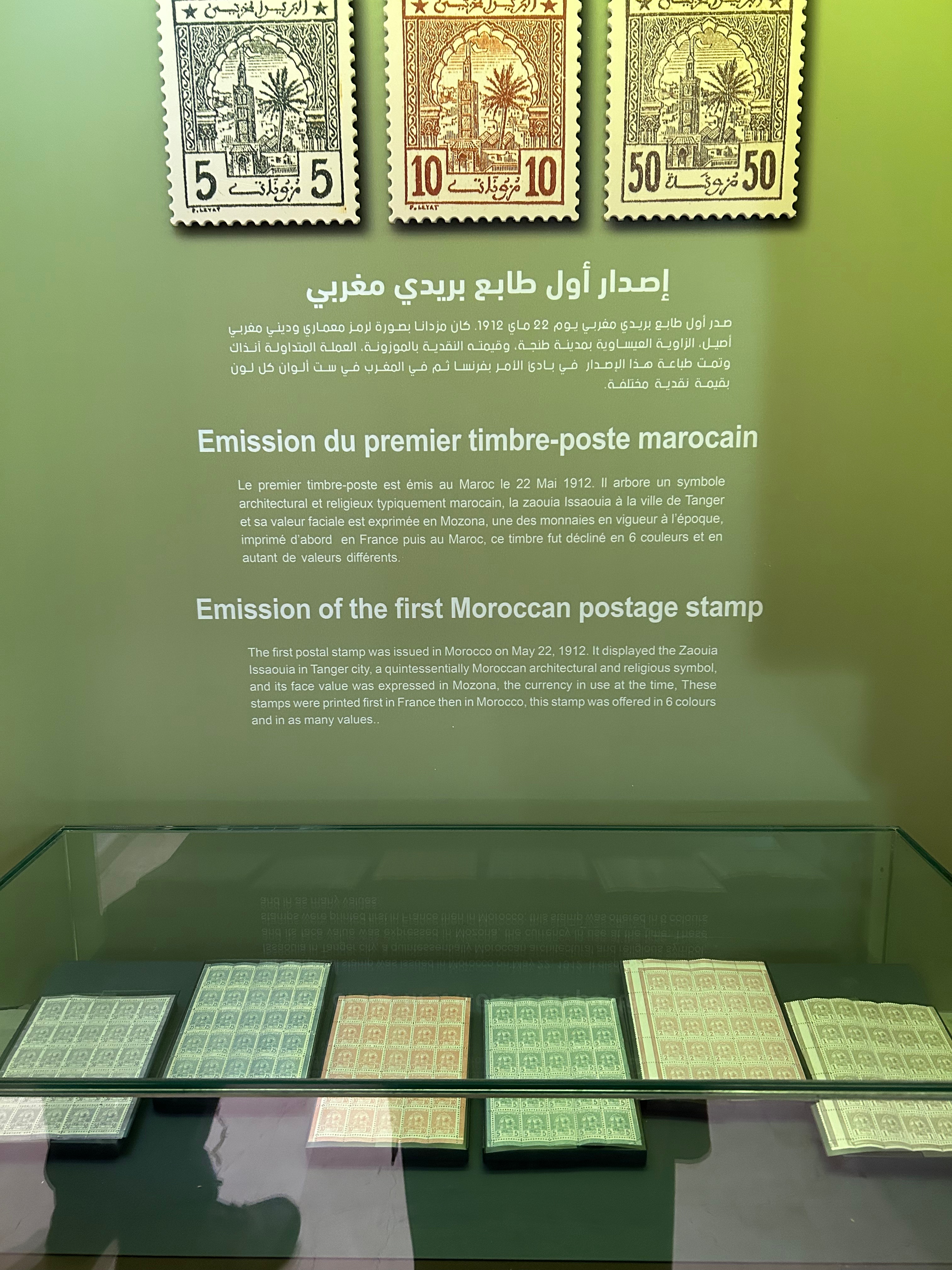
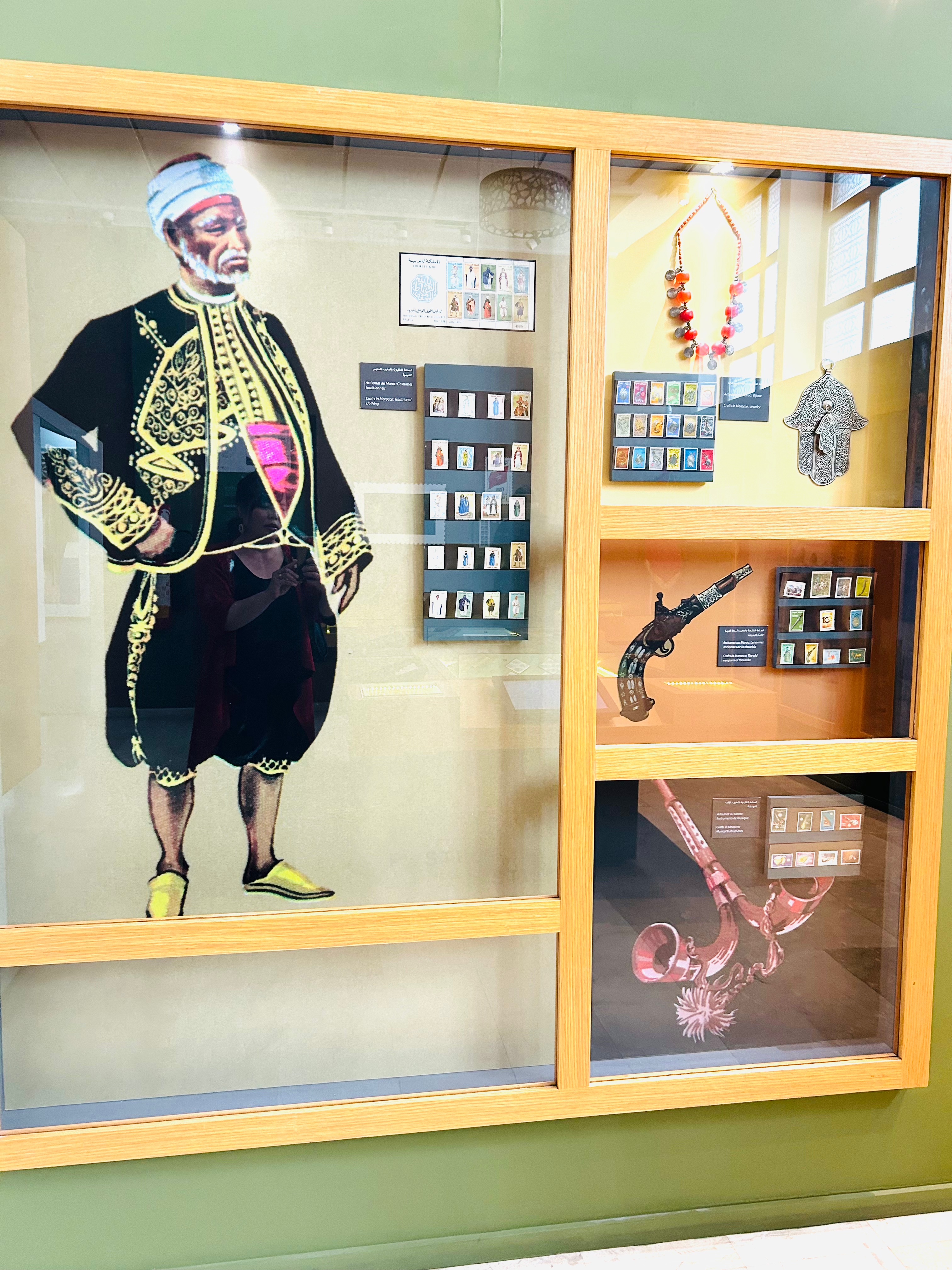
Various stamps are displayed according to time and place; under French rule, Spanish rule, German rule, or British rule. Meanwhile, in 1892, during the time of the Sultan Moulay Hassan I,theMAKHZEN POSTAL, a postal delivery system run by Moroccans which connected 13 cities in Morocco, was established. Back then, postmen calledThe Rekkas would either ride horses or walk to deliver mail – dressed like this (carrying a packed lunch of dates, honey, and bread). Must be a tough job!
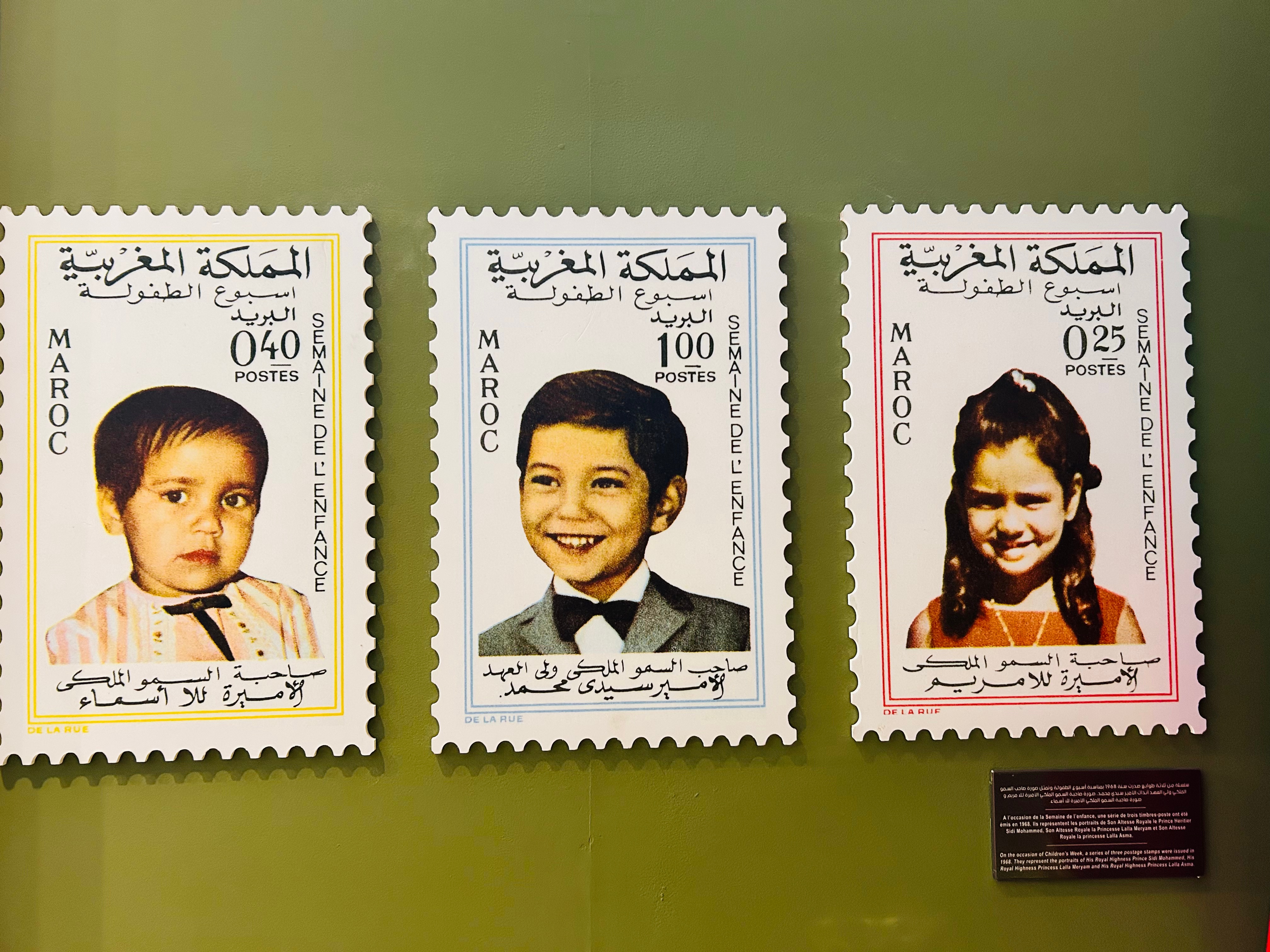
Apparently, the very first Moroccan stamps were printed in 1912. I met Tariq-san, who is a museum director; “You see, stamps from the Spanish colonial period had people’s faces and bodies on them, but Moroccan stamps tended to feature more scenery and architecture.” Oh, I see. Tariq-san was very informative and very funny, too. “By the way, you are the only two visitors today – ahaha…” SOOO, I truly recommend for you to visit this museum! Seriously, you get very personal attention & a friendly tour.
Next section; the first and second wars broke out, and Morocco became a place of interest (remember the movie “Casablanca”?). Therefore, many airmail & military-related mail stamps are found here. The museum exhibit continues more to contemporary stamps, and some of them are considered “high-tech stamps” such as <fragrant stamps> or <stamps that pray national anthem>. Wow!
The museum also showcases some historical documents and postal artifacts. It was a great opportunity to learn how Morocco has developed while understanding the history of its postal system. I have to say, this is a museum worth visiting for only 10MAD – Especially it includes your visit to the nearby Moroccan Bank Museum (Bank Al Maghrib Museum). How generous are they??? No wonder they didn’t care about my -0.1MAD stamp situation. Please enjoy the part of Moroccan National Anthem through one of their stamps. 🎶
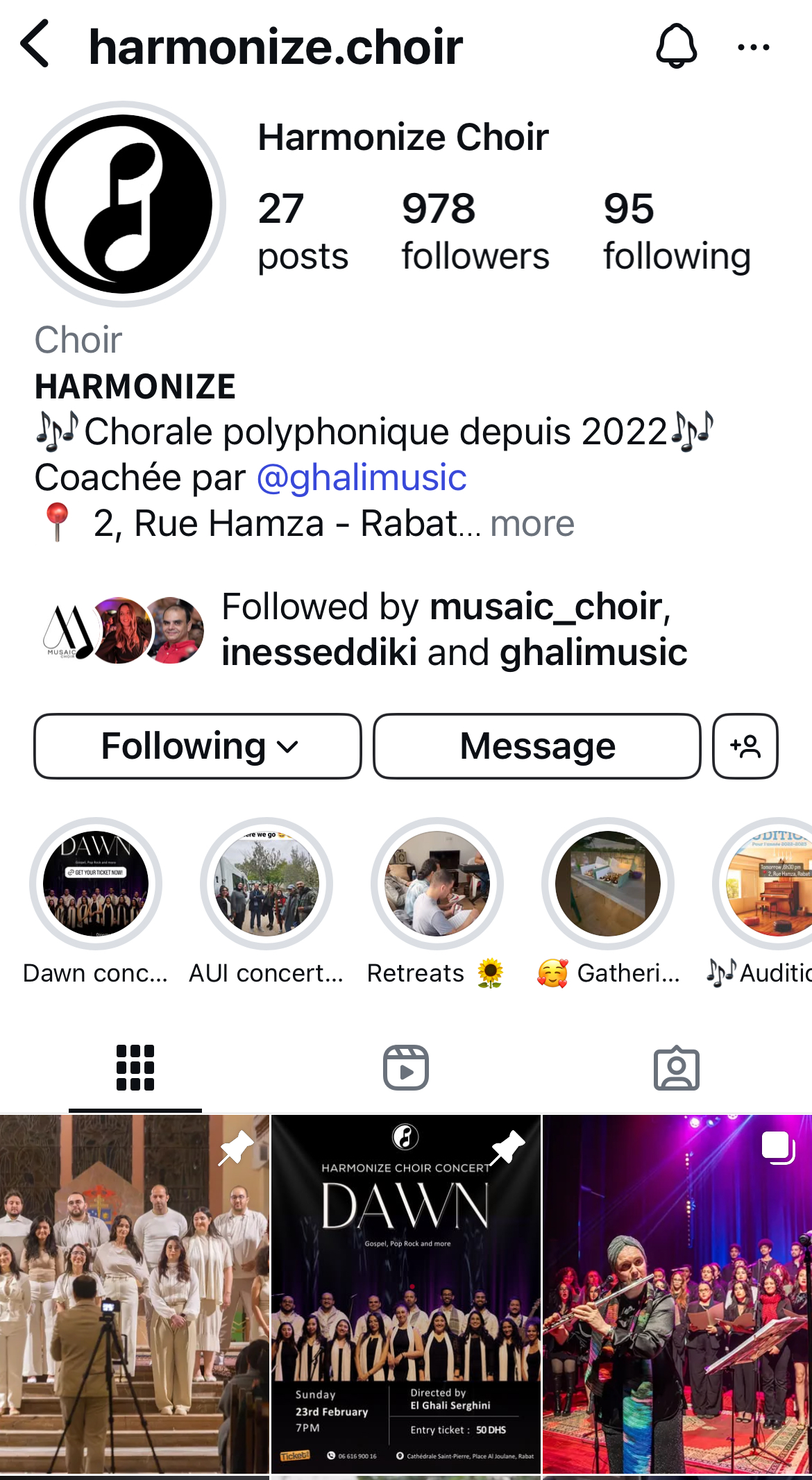
One thing I miss tremendously after 2 months of living in Agdal, is singing in a choir. I have been singing since I was 10 years old – and, singing in a choir has always been a very special way to connect with my faith (I am Lutheran). I knew there were a couple of choir groups in Rabat, but my lack of French/Darija knowledge has discouraged me from contacting any of these groups. I don’t want to be their burden when directions are conducted in those languages… I should learn the language first, then maybe try the audition… I think.
So, when I found this flyer for the concert, I begged my husband “Can we PLEASE go?? S’il vous plait??” でも、こんなチラシを見たら「ね!ね!行こうよ、ね?」と旦那さんにお誘いもうしあげました!
🎶🎵OH MY GOODNESS!🎵🎶
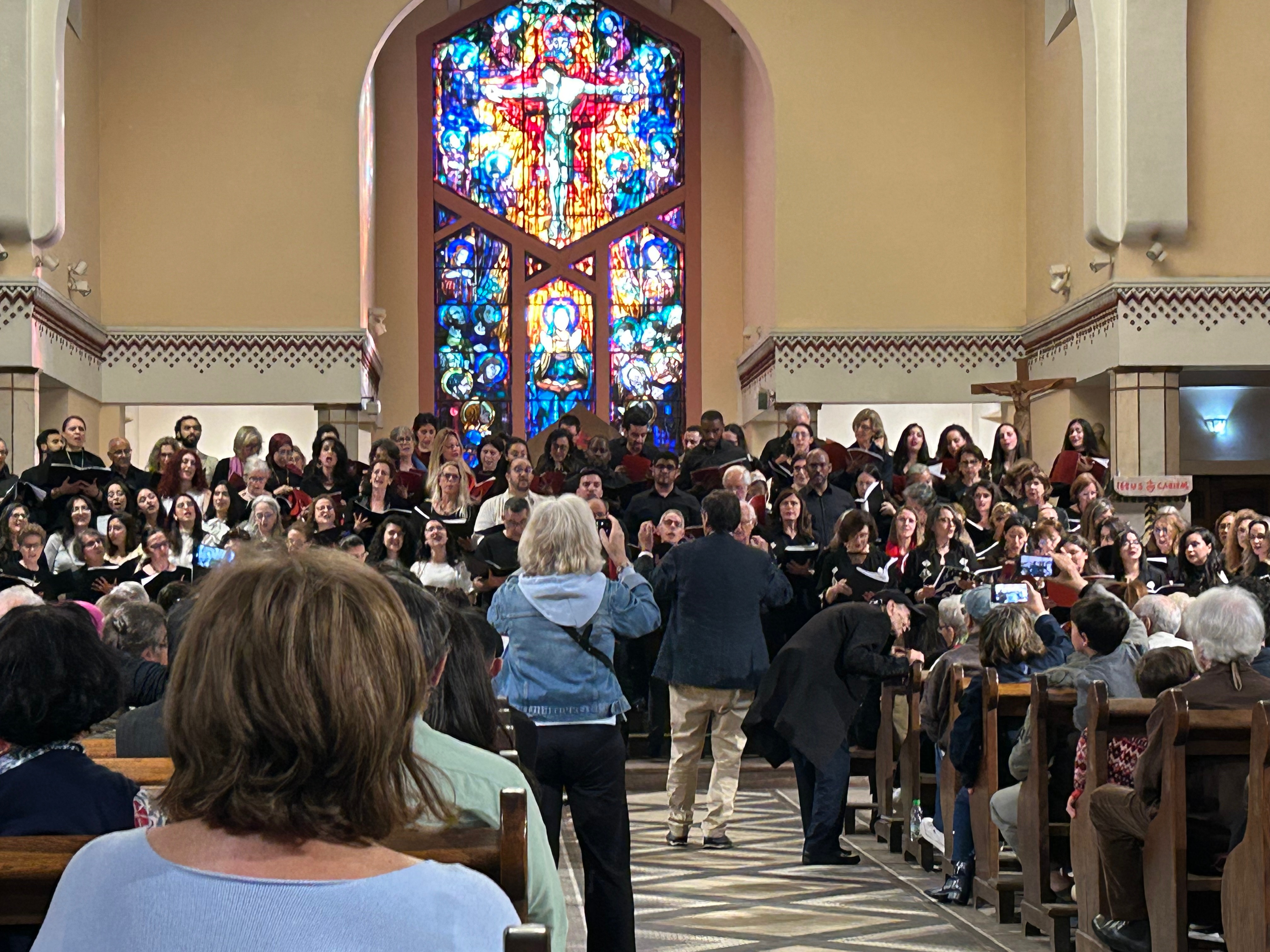
Not only are they absolutely talented musicians, but also, they are just fun-loving & sweet people! And the cathedral was packed with an audience with happy faces. 🥰🥰
本当に音楽性の高いそして優しく楽しいみなさんの演奏!そして会場となった教会は観客でいっぱいでした!
One group in particular touched my heart – Chorale Harmonize Choir from Rabat. Their repertoire was big, from Un Poco Loco to Cold Play’s Viva La Vida, but when I heard their Amazing Grace, I was in tears. I felt all my senses relaxed, almost like I was in my mother’s womb. But, in a way, it gave me some sort of permission to feel sad, because I missed singing so much.
Anyway, I didn’t expect that I would be able to listen to Amazing Grace, in Morocco, on Palm Sunday. What a treat! I thanked God, I thanked the Harmonize Choir, I thanked the director of the choir, I thanked my husband (who took time off to come with me!).
There were three other choir groups; two from Casablanca, and another one from Rabat: Chorale Nagham de Casablanca, Chorale Polyphonique de Casablanca, Ensemble Vocal a Chœur Joie Rabat. They were all so wonderful, and the whole 2 hours passed so quickly. At the end, Chant Commun was led by Mr. Thierry Thiebaut.
Like I said, I miss singing, especially in a choir setting… so much. There were times Olof and I would put together duet performances at our home church in Seattle (Prince of Peace Lutheran Church in Shoreline) for special occasions. Here, I am going to share the video of Olof playing ukulele, and me singing Swedish Christmas song (in English & Swedish), “Jul, jul, strålande jul.” I also recorded a couple of songs with Indian producers, and this one is on Spotify (sung in Japanese).
I still remember what my choir master once said: “When singing in a choir, it is more important to listen to how OTHERS in different parts sing, rather than how well YOU sing. You will learn to co-exist, and that makes great harmony, and that also makes you sing better.” I feel like this is the lesson I am learning in everyday life in Morocco. People here are very good at this “co-existing” lifestyle, which creates strength and a positive future in society. I am so lucky to have good teachers around me.
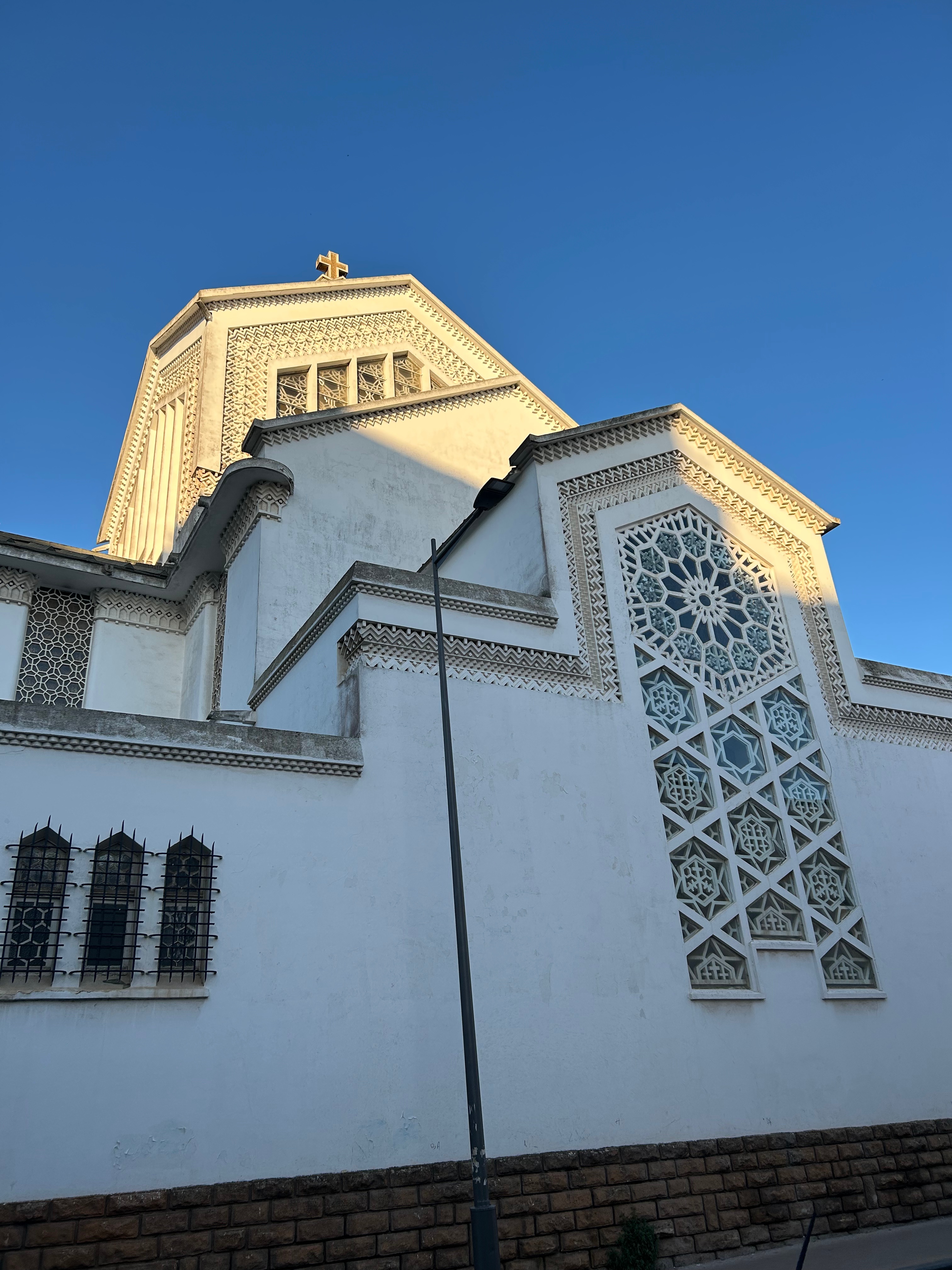
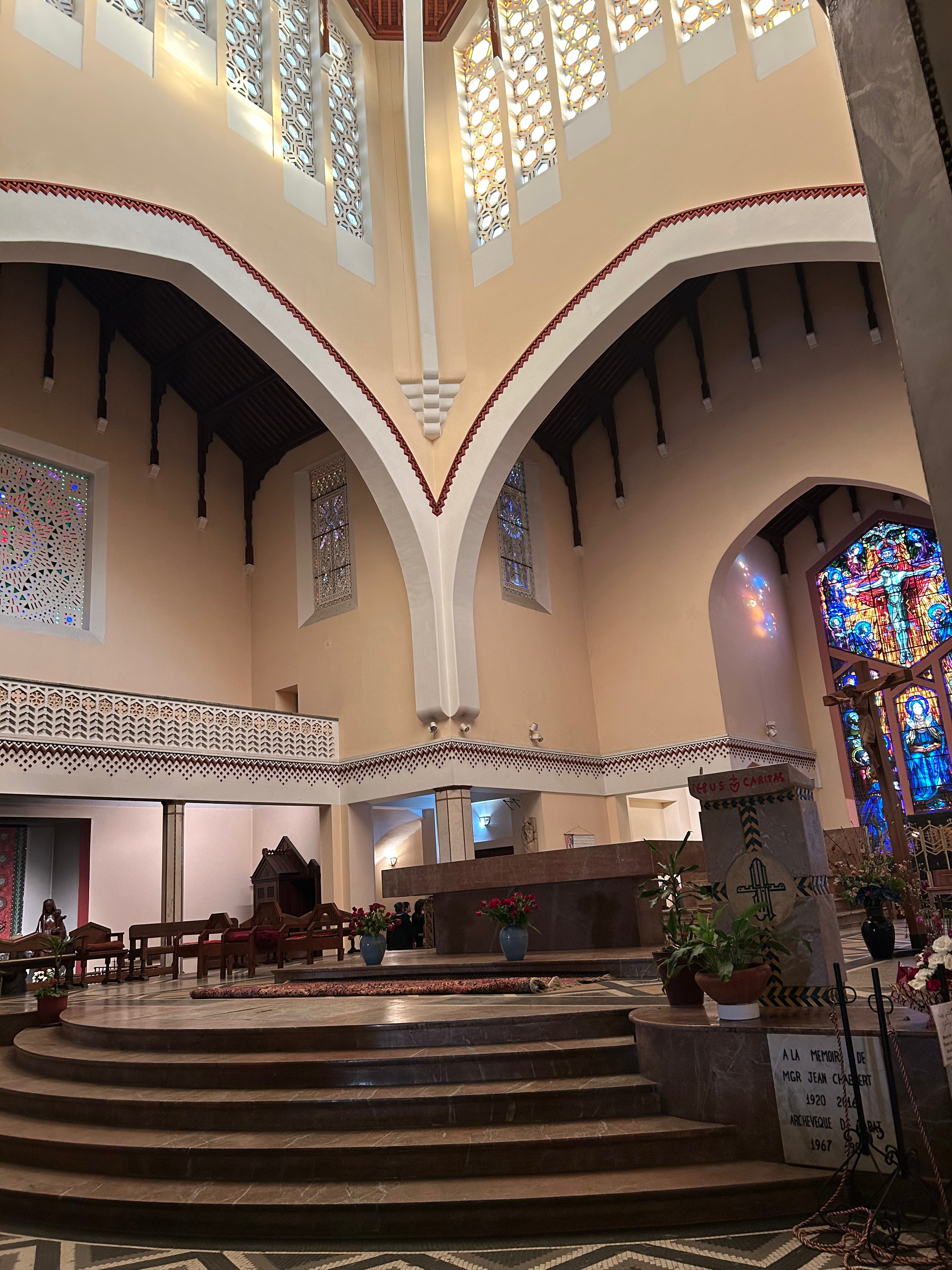
Surely, “Amazing Grace” was shed to everyone yesterday, at beautiful Cathédrale Saint-Pierre de Rabat, thanks to the power of music. And, I should study hard! on my French & Darija!!!
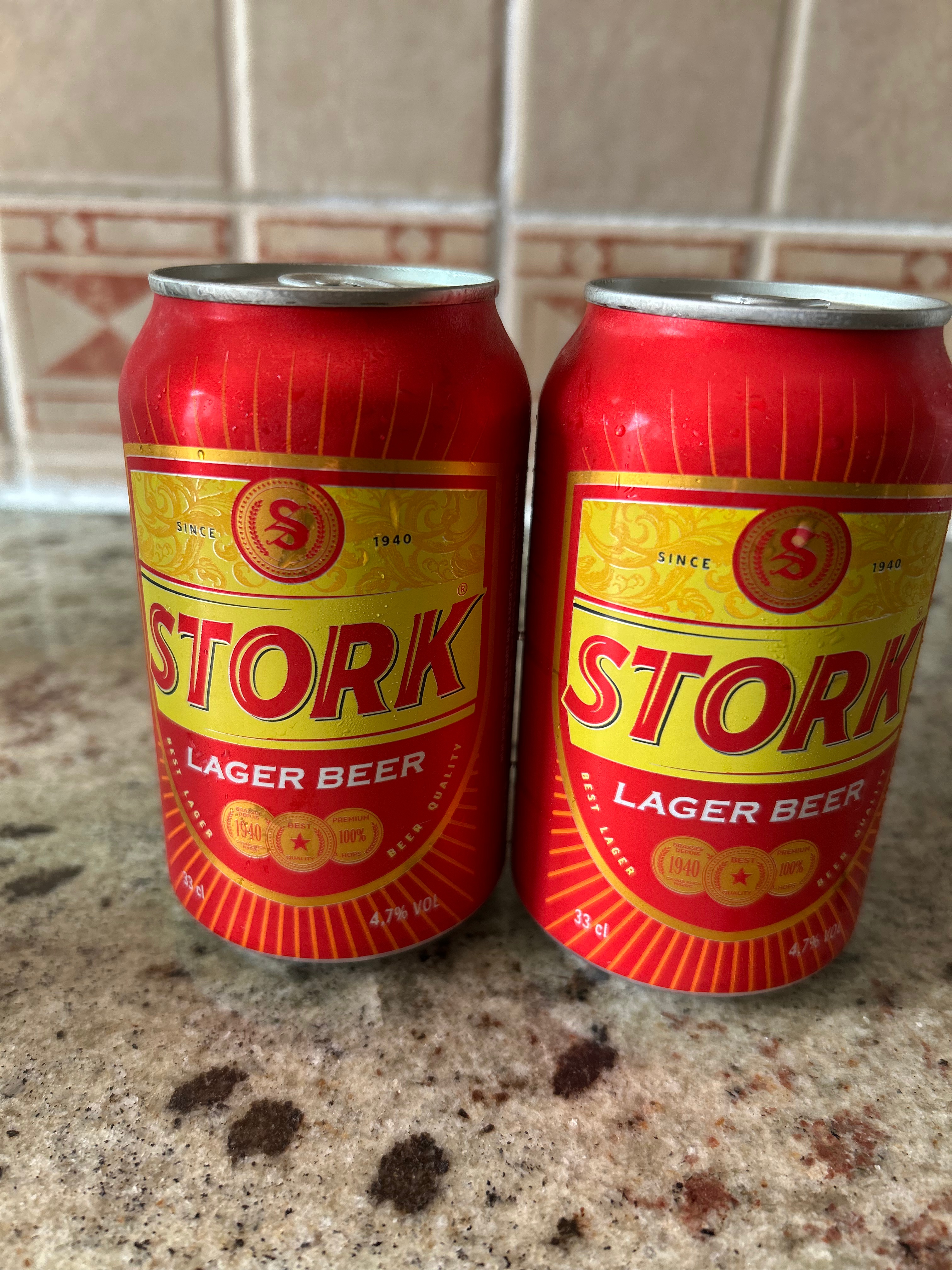
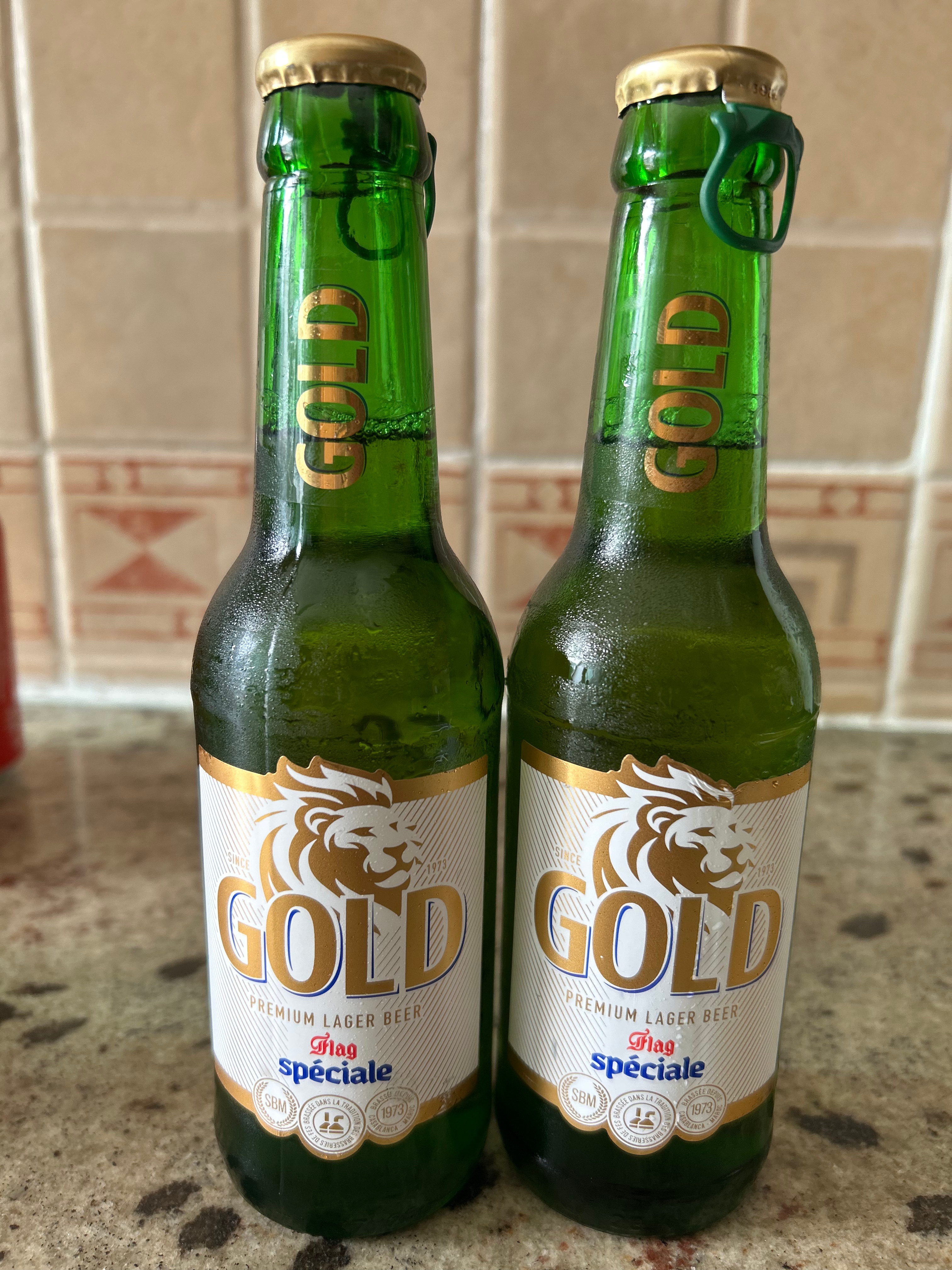
I wrote about La Cigogne on this blog before. I found out that the same company produces a beer called “Stork” – yup, Moroccans love their storks 🙂 Since I am allergic to alcohol, I asked my husband to do a taste test.
They are kind of cute together, non? 一緒だと可愛くないですか?
Okay, so, I asked him how he liked the taste! で、早速ですが、ご感想を!
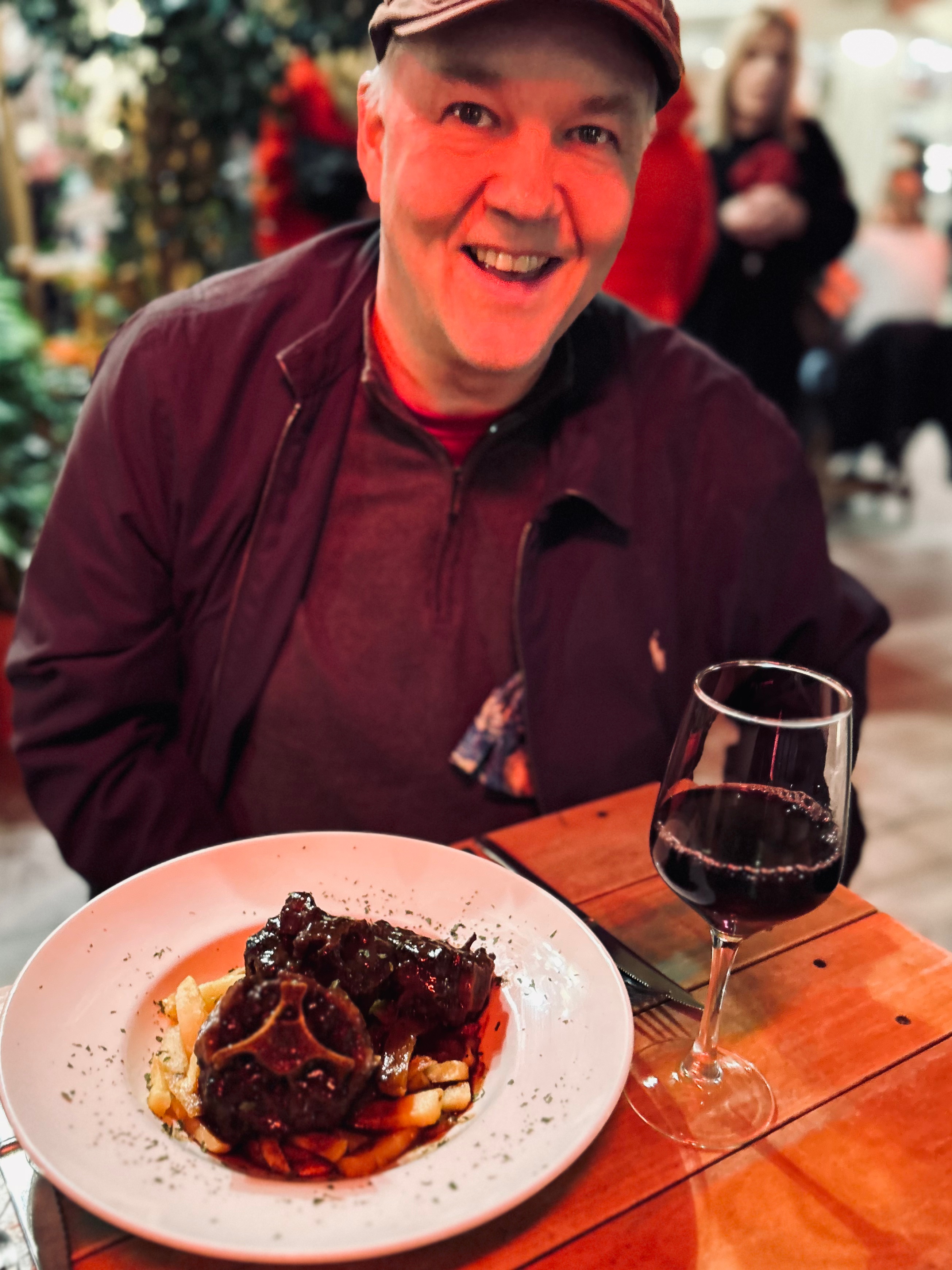
“Yeah, well, as expected, it tastes like beer in Sweden. It’s not that delicious, but it’s nice to have.” – I don’t really understand what he meant, but he probably meant that it is a kind of beer that you’d certainly know that it’s beer, and you are grateful that it exists in your vicinity. In short, its existence matters more than its tastes. Or, maybe, it’s like a same concept as “If You are Happy and You Know It” song. You can clap your hands because there is the taste of beer and there is a liquor store (which is open). 👏👏
To tell you the truth, before moving to Morocco, some of my friends asked me “Are you guys going to be okay, can your hubby get alcohol there?” and I was really not sure what to expect. I myself was also a little worried that my Swedish husband, who enjoys drinking alcohol occasionally, would have some difficulties finding his “adult beverages” around, making new friends to enjoy glasses of wine or beer with, or going out to those “establishments” easily…
But, where we live (in Agdal, Rabat), there are 4 liquor stores within walking distance! One is only a two-minute walk from our apartment. It’s VERY dangerous. There are also many pubs/bars nearby (you can easily tell, because there is a bouncer or a man in a black suit standing at the entrance – avec easy-to-tell neon lighting). The Ramadan period when alcohol sales and drinking establishments were completely closed off seems like an illusion now. I still cherish the great impromptu trip we took, crossing the border into Spain by ferry⛴, just to get his “adult beverages” 🤣 – Good time…
Come to think of it, it is so much easier to get beer, wine, or and any other “adult beverages” at anytime, than getting things such as, postcards of Rabat, fresh tofu, natto, or even plastic wraps with cutters. Oh well. But, as a person whose ultimate goal is to become a perfect wife I am so happy to see my husband go to his favorite liquor store to get his “adult beverages” here. I clap my hands. 👏👏